Saturday, April 28, 2018

AKDN Values in Action


Reminder: "His Highness the Aga Khan's advices for leaders which enable sound national and community progress and development

"[D]evelopment is only possible when the community is engaged at the grassroots level and is given the ways and the means to take responsibility for its own future." His Highness the Aga Khan's 2006 Address to the Conference on Afghanistan (London, UK)"
Mawlana Hazar Imam defines what he means by civil society and discusses the contribution of private institutions to public goals at Institut d'Etudes Politiques de Paris on 15 June 2007.

Same year major policy change intimated to all institutions."CIVIL SOCIETYLEARNING MATERIAL" compiled and published as a solid step towards REORIENTATION introduced through constitution issued in 1998.

Thursday, April 26, 2018

Autism Awareness Month Resources

April is Autism Awareness Month. Celebrate World Autism Awareness Day (April 2) and explore the many facets of Autism Spectrum Disorder (ASD) with our cross-curricular lessons, printables, quizzes, and activities below. You'll find informational teaching tips and tools for special educators, general educators, paraprofessionals, and administrators, along with many resources for students in grades K-12. From behavior management and socialization tools to reading guides and inclusive classroom resources, TeacherVision has everything you need to support students, colleagues, and parents.

Autism Resources
Use our resources to choose the best approach for teaching students with Autism Spectrum Disorder (ASD) in your classroom. Resources include matching social interaction to the needs of your students, peer tutoring, and direct skill instruction.
Teaching Methodology
New teachers and veteran teachers alike will enjoy these resources. Includes information about how an inclusion classroom works, strategies to help you teach effectively, and information on how collaboration between general education and special education teachers is vital.
Assessment Accommodation
With these resources, you will be guided through principles of assessment accommodation and provided a checklist, as well as preparing for IEPs, designing and implementing portfolio assessments, and more.
Printables
Choose from our list of printables to help you with special needs students. Includes charts to track behavior management, planning for diverse students, accommodations checklist and for IEPs, and adaptations to help with disabled students.
Classroom Management & Discipline
Our collection of Classroom Management and Discipline resources will help new teachers as well as veteran teachers. Includes references with guidance for managing disruptive behavior, characteristics of effective behavior managers, and much more.

Friday, April 13, 2018

Need for a National Innovation and Science Agenda

The Agenda

Extraordinary technological change is transforming how we live, work, communicate and pursue good ideas. We need to embrace new ideas in innovation and science, and harness new sources of growth to deliver the next age of economic prosperity. The National Innovation and Science Agenda is an important step in the right direction.
Innovation is important to every sector of the economy – from ICT to healthcare, education to agriculture, and defence to transport. Innovation keeps us competitive. It keeps us at the cutting edge. It creates jobs. And it will keep our standard of living high.
The National Innovation and Science Agenda  will drive smart ideas that create business growth, local jobs and global success. 

Wednesday, April 4, 2018

SEARCH FOR COURSES: LINKS THROUGH POSTS

RELATEDEXAMPLE: A lesson about every single element on the periodic table
  1. ECD: NURSERY:     https://www.youtube.com/watch?v=UFccvtrP1d8
  2. ADULT EDUCATIONAL RESOURCES 
  3. SECONDARY: Here are a few of the best:
Coursera. Coursera works with top universities from around the world to offer classes online for free. You can take classes from a variety of disciplines including computer sciences, psychology, and Spanish.
OpenStudy. OpenStudy is a social learning network that allows you to connect with individuals with the same learning goals as you.
Khan Academy. I freaking love Khan Academy. You’ll find over 4,000 videos covering topics ranging from algebra to finance to history. My favorite part of Khan Academy, though, is math exercises. You start with basic math and work your way up to calculus in an adaptive, game-like environment. I’ve been slowly going through the exercises to freshen up on my math.
Duolingo. Free website to learn foreign languages. It’s a pretty cool set up. As you progress through the lessons, you’re simultaneously helping translate websites and other documents.
Code Academy. Learn to code for free with interactive exercises. I wish Code Academy was around when I was learning how to build AoM. It would have helped a lot.
edX. Harvard University and MIT partnered together to create interactive, free online courses. The same world-renowned professors that teach at Harvard and MIT have created the courses on edX. You can find courses for just about any subject. I’ve signed up for a class called The Ancient Greek Hero. Class started last week, but you can still sign up. Join me!
Udacity. Udacity is similar to edX and Coursera. College level classes taught online for free.
CreativeLive. I discovered CreativeLive a few weeks ago. It’s an interesting concept. You can watch the live stream of the course being taught for free, but if you want to view the course later and at your own pace you have to pay for it. The courses focus on more creative and business subjects like videography and online marketing. I’ve sat in on a few of the free courses and was impressed with the curriculum.
TED. TED compiles speeches and lectures not only by professors but interesting people from many different walks of life. TED talks are lighter than academic lectures, often quite funny, and concentrate on interesting ideas and concepts. And most are 20 minutes or less, so they’re great for those with a short attention span.
iTunes U. Download thousands of free podcast lectures taught by the best professors from around the world and learn while in your car.
YouTube EDU. Instead of watching a bunch of auto-tuned cats, enrich your mind by browsing through YouTube EDU. They have thousands of videos that cover a variety of topics.
Adult basic education
·       TV411: This website offers engaging videos on reading and writing and sections on basic finance, science, and math. All topics have online lessons students can complete, as well as downloadable worksheets.
·       PBS LiteracyLink: This site offers a range of adult basic education resources with interactive lessons. Teacher accounts are also available to allow access to a collection of lesson plans and handouts.
·       Hopelink Adult Education: This is a collection of lesson ideas specifically for adult educators in reading, writing, math and financial literacy, the GED, and workplace skills. There are also special lesson ideas for working with ESL and learning-disabled students.
  1. TERTIARY:
    1. BUSINESS
    2. ENERGY
    3. ENGINEERING
    4. FINE ARTS
    5. HEALTH AND MEDICINE
    6. Humanities
    7. Mathematics
    8. Science
    9. Social Science
    10. Society
    11. TEACHING AND EDUCATION
  2. SKILLS:

  • CONSTRUCTION AND BUILDING TECHNOLOGY
The Construction and Building Technology sector covers all the skilled areas that are related to the construction world. This encompasses everything from the foundation, grounds, building, finishing and maintaining of all sorts of buildings.
The Creative Arts and Fashion sector covers all the skilled areas that are related to fine arts and fashionable design and creation. This encompasses everything from multi-media creative, interior decoration and fashion.
The Information and Communication Technology sector covers all the skilled areas that are related to information services. This encompasses everything from network creation and maintenance to development and finishing information technologies.
The Manufacturing and Engineering Technology sector covers all the skilled areas that are related to industrial development and creation. This encompasses everything from the design, creation, making and maintaining of anything involving electronics and machines.
The Social and Personal Services category covers all the skilled areas that are related to the service industry. This encompasses services related to the food and beverage industry as well as the hospitality and personal care.
The Transportation and Logistics sector covers all the skilled areas that are related to the transportation world. This includes creating, repairing and maintaining transportation vehicles.

Saturday, March 24, 2018

A pluralist society begins in the classroom


By Gabriella Rowe

March 23, 2018 Updated: March 23, 2018 2:22pm


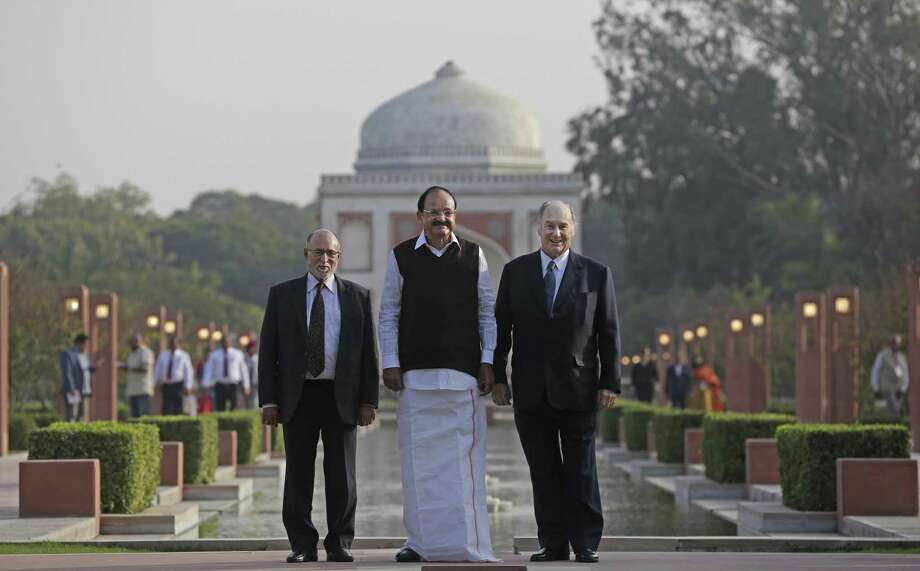
Photo: Altaf Qadri, STF / Associated Press - IMAGE 1 OF 8

Aga Khan, right, spiritual head of Ismaili Muslims and the founder Chairman of Aga Khan Development Network stands with Indian Vice President Venkiah Naidu, center, and Lieutenant Governor of Delhi Anil Baijal ... more

In our increasingly globalized world, it is a pluralist cosmopolitan society that thrives. This is a society that recognizes and affirms diversity from within, and not only accepts those differences, but seeks to understand and learn from them.

MOST POPULAR

Rowe: The Aga Khan’s visit to Houston reminds us that a...

In Houston and beyond, Harvey’s spills leave a toxic legacy

Austin bomber’s cellphone confession provided ‘targets...

Terrorist or not, the Austin bomber was not a 'good' kid...

Jose Altuve says Justin Verlander offered insight into...

Leon Jacob convicted of hiring hitman to take out ex-girlfriend

Trump signs budget that Ted Cruz says was 'drafted by the...


This year marks His Highness the Aga Khan’s Diamond Jubilee, his 60 years as the 49th hereditary Imam (spiritual leader) of the world’s Ismaili Muslims. With the Aga Khan’s visit to Houston this week — one of the most diverse cities in America — to celebrate this milestone, the Ismaili community here is using the opportunity to reflect on his commitment to faith, pluralism and improved quality of life across the world. A particular focus of his is bringing pluralism — a capacity to see those from different backgrounds as equals — into the classroom.

As Head of School at The Village School in Houston, I place the highest value on diversity. Our student body represents six continents and more than 60 countries. We celebrate the diversity of our international community every day.

This pluralistic outlook is not an in-born skill — it must be learned through education.

TRANSLATOR

To read this article in one of Houston's most-spoken languages, click on the button below.


Select Language

OUTLOOK


ETORIAL: Word of Houston mash-up of culture and ethnicity is spreading like a Texas wildfire.


Classrooms must aim to influence how students interact with others and choose to contribute to the world. Through open and deliberate collaboration and dialogue with people from varied cultures, languages and values, students should be encouraged and expected to make a positive impact on those around them. Working and contributing on a global scale was once far-fetched. With today’s technology, making a difference in the world has become simpler and much more practical.

Technology and globalization is moving at a rapid pace — and education must keep up. A shift in attitude toward tolerance and openness, the ability to accept pluralistic views, and a well-rounded, unbiased understanding of diverse social environments must be considered in education. Whether learning about a different cultures holidays or encouraging students to volunteer and get involved with their own community, pluralistic values should have an essential role in our educational environments.

If we’re not teaching this in school (and home and at work), as the Aga Khan has said, “The inability of human society to recognize pluralism as a fundamental value constitutes a serious danger for our future.”

EDITORIAL: As Ramadan ends, so should ugly rhetoric about Muslims


We all have a responsibility to ensure our children are well prepared to lead a successful and purposeful life as engaged world citizens.

It is a lesson I learned in person last summer while visiting The Ismaili Centre in London with Mayor Sylvester Turner and a group of Houston leaders assembled by the Greater Houston Partnership.

As an educator in Houston, I welcome the Ismaili community’s effort to further progress the humanitarian works of the Aga Khan in their local communities — as well as the global community through the Aga Khan Development Network and its Aga Khan Academies.

Those schools, which currently serve India, Kenya and Mozambique, aim to develop future leaders from all backgrounds with the skills and knowledge to support positive development in their societies and beyond. Pluralism is taught there — the kind of pluralism that Houstonians learn every day in our own schools.

Danish Jamal, a graduate from the Aga Khan Academies, said, “We were taught to be more open-minded and less judgmental of others… We learned and experienced cultures of people across the worlds… I can live, attend college and work in almost any country.”


Deliberately embedding diversity into school is a necessity to help our students confront the new and complex realities of living and thriving in a global society. It’s an honor to have the Aga Khan in Houston this week to share his and the Ismaili community’s contributions and commitment to pluralism in this diverse city of ours and well beyond it.


Rowe is the head of school for The Village School, part of Nord Anglia Education.