Sunday, February 16, 2025

The Quranic term **"Rasikhūn fī al-ʿIlm"** (راسخون في العلم, "those firmly grounded in knowledge")

 The Quranic term **"Rasikhūn fī al-ʿIlm"** (راسخون في العلم, "those firmly grounded in knowledge") from Surah Āl ʿImrān (3:7) has been interpreted diversely across Islamic schools of thought, reflecting theological, jurisprudential, and philosophical differences. Below is a structured analysis of these interpretations:


1. Sunni Schools

- General View: 

   - Emphasize scholarly expertise in Quranic exegesis (tafsīr) and Islamic sciences. 

   - Debate centers on whether "Rasikhūn" can interpret ambiguous (mutashābihāt) verses or merely affirm faith in them.

- Key Debates:

   - Grammatical Pause (Waqf): 

    - Pause after "Allah": "None knows its interpretation except Allah." Here, scholars (Rasikhūn) humbly defer to divine knowledge, declaring belief without claiming to interpret ambiguities (Ashʿarī emphasis on divine transcendence).

    - Pause after "Rasikhūn": "None knows its interpretation except Allah and those grounded in knowledge." This allows scholars limited interpretive authority (Māturīdī and some Ḥanbalīs).

  - Authority: Mainstream Sunnism (Hanafī, Shāfiʿī, Mālikī, Hanbalī) generally permits qualified scholars (ulamā) to interpret ambiguities within textual and rational frameworks, avoiding esotericism.


2. Shia (Twelver/Imāmī) Interpretation

- **Imams as Rasikhūn**:

  - The term refers exclusively to the divinely appointed Imams (e.g., ʿAlī and his successors), who possess inherited, infallible knowledge (ʿilm ladunī) to decode both literal and hidden (bāṭin) meanings.

  - Ambiguous verses are resolved through the Imams’ guidance, reflecting Shia belief in their role as custodians of Quranic truth.


3. Sufi/Mystical Perspective

- **Spiritual Insight**:

  - "Rasikhūn" are saints (awliyā) or mystics who attain knowledge through direct spiritual experience (kashf) and divine illumination.

  - Ambiguities symbolize deeper truths accessible only via inner purification (tazkiyah) and esoteric (bāṭinī) interpretation.


4. Salafi/Literalist Approach

- **Early Scholars (Salaf)**:

  - "Rasikhūn" are the first generations (Salaf al-Ṣāliḥ), whose understanding is uncontaminated by innovation (bidʿah).

  - Reject esoteric or metaphorical interpretations, stressing literal adherence to the Quran and Sunnah.


5. Muʿtazili Rationalism

- **Role of Reason**:

  - Emphasize rational analysis (ʿaql) alongside scripture. 

  - "Rasikhūn" are scholars using logic to resolve ambiguities, asserting that reason complements revelation.


6. Ismaili Shia

- **Imam’s Esoteric Role**:

  - Similar to Twelvers but extend the Imam’s authority to esoteric (bāṭin) interpretations, viewing the Quran as layered with meanings accessible only through the Imam’s guidance.


**Theological Implications**

- **Ashʿarī vs. Māturīdī**:

  - **Ashʿarīs**: Caution against overinterpreting ambiguities, prioritizing divine transcendence (tanzīh).

  - **Māturīdīs**: Allow greater scope for reasoned interpretation, aligning with their emphasis on ʿaql (intellect).


**Conclusion**

The term "Rasikhūn fī al-ʿIlm" encapsulates core debates in Islamic thought:

- **Authority**: Who holds interpretive power—scholars, Imams, or mystics?

- **Epistemology**: How is knowledge acquired—through text, reason, or revelation?

- **Theology**: Balancing divine transcendence with human intellectual effort.


These interpretations reflect each school’s broader theological and philosophical commitments, illustrating the rich diversity within Islamic exegesis.


Saturday, February 15, 2025

Lauh e Mahfooz (لوح محفوظ)

RELATED: AMMAN DEC


LARATION;
 Surah Al-Isra (17:71)Surah Al-Ma'idah (5:15)Sūrah Yāsīn* (36:12)Surah Āl ʿImrān (3:7);

The term **Lauh e Mahfooz** (لوح محفوظ) in the Quran refers to the "Preserved Tablet," a celestial record where all events, decrees, and knowledge of the universe are inscribed by Allah. It is mentioned in the Quran in Surah Al-Buruj (85:22) as "a well-preserved tablet." Different schools of thought in Islam have interpreted this concept in various ways, reflecting their theological and philosophical perspectives. Below is an overview of the interpretations by major Islamic schools of thought:

1. **Sunni Interpretation**

   Mainstream Sunni View: The Lauh e Mahfooz is a literal, divine record that preserves Allah's eternal knowledge and decrees. It encompasses everything that has happened, is happening, and will happen, including the destinies of all creation.

   - **Theological Emphasis**: Sunnis emphasize the absolute omniscience and predestination (Qadar) of Allah. The Lauh e Mahfooz is seen as a manifestation of Allah's eternal knowledge and will.

   - **Ash'ari and Maturidi Schools**: These schools, which dominate Sunni theology, interpret the Lauh e Mahfooz as a real, metaphysical entity that exists beyond human comprehension. It is not subject to change and reflects Allah's unchanging will.


2. **Shia Interpretation**

   - **Twelver Shia View**: The Lauh e Mahfooz is also understood as a divine record of all events and decrees. However, Shia theology often links it to the concept of **Imamate** and the knowledge of the Imams, who are believed to have access to divine knowledge.

   - **Ismaili Shia View**: Ismailis emphasize the esoteric (batin) meaning of the Lauh e Mahfooz. They interpret it as a symbol of the universal intellect or the divine source of knowledge, accessible through the guidance of the Imam.

   - **Philosophical Interpretation**: Some Shia scholars, influenced by Islamic philosophy, view the Lauh e Mahfooz as a metaphysical reality that represents the totality of divine knowledge and the blueprint of creation.


3. **Sufi Interpretation**

   - **Symbolic and Mystical Understanding**: Sufis often interpret the Lauh e Mahfooz symbolically rather than literally. It is seen as a representation of the divine knowledge and the ultimate reality (Haqiqah) that underlies the universe.

   - **Unity of Existence (Wahdat al-Wujud)**: In Sufi metaphysics, the Lauh e Mahfooz is sometimes associated with the concept of the "First Intellect" or the "Universal Soul," reflecting the idea that all creation is a manifestation of divine will and knowledge.

   - **Spiritual Insight**: Sufis believe that through spiritual purification and closeness to Allah, one can gain glimpses of the knowledge contained in the Lauh e Mahfooz.


4. **Mu'tazilite Interpretation**

   - **Rationalist Approach**: The Mu'tazilites, known for their rationalist theology, interpreted the Lauh e Mahfooz in a way that aligns with their emphasis on divine justice and human free will. They argued that the Lauh e Mahfooz contains Allah's knowledge but does not negate human agency.

   - **Metaphorical Understanding**: Some Mu'tazilites viewed the Lauh e Mahfooz as a metaphorical expression of Allah's omniscience rather than a physical or metaphysical tablet.


5. **Philosophical (Falsafa) Interpretation**

   - **Islamic Philosophers (e.g., Ibn Sina, Al-Farabi)**: Islamic philosophers often interpreted the Lauh e Mahfooz in the context of cosmology and metaphysics. They associated it with the "Active Intellect" (Al-'Aql Al-Fa'al) or the universal mind that governs the order of the universe.

   - **Blueprint of Creation**: In this view, the Lauh e Mahfooz represents the eternal and unchanging laws that govern the cosmos, reflecting the harmony between divine knowledge and the natural world.


6. **Modernist and Reformist Interpretations**

   - **Symbolic and Ethical Understanding**: Some modernists and reformists interpret the Lauh e Mahfooz symbolically, emphasizing its ethical and spiritual significance rather than its literal or metaphysical aspects.

   - **Scientific Perspective**: A few contemporary thinkers have attempted to reconcile the concept of the Lauh e Mahfooz with modern scientific ideas, such as the laws of physics or the concept of a "cosmic blueprint."

Classical Concept Modern Metaphor Key Takeaway

Preserved Tablet Cosmic Source Code / Read-Only Master File Reality is based on a perfect, unchanging blueprint.

Inscribed with All Things The Block Universe / Complete Timeline God's knowledge encompasses all time simultaneously.

Protected from Alteration Quantum-Secured Blockchain Divine truth and decree are incorruptible.

Source of Revelation Direct Download from Server The Quran is an eternal, not historical, text.

Record of Deeds Ultimate Cloud Storage with Perfect Retrieval Absolute moral accountability exists.


Key Points of Agreement and Difference:

- **Agreement**: All schools of thought agree that the Lauh e Mahfooz is a divine record that reflects Allah's eternal knowledge and will.

- **Difference**: The interpretations vary in terms of literalism vs. symbolism, the relationship between divine knowledge and human free will, and the metaphysical nature of the Lauh e Mahfooz.


In summary, the Lauh e Mahfooz is a profound concept in Islamic theology, and its interpretation reflects the diverse intellectual and spiritual traditions within Islam. While some emphasize its literal and metaphysical reality, others focus on its symbolic and ethical dimensions.


Thursday, February 13, 2025

The impact of artificial intelligence (AI) on traditional religious thought


The impact of artificial intelligence (AI) on traditional religious thought is multifaceted, involving both challenges and opportunities. Here's a structured assessment:

1. Creation and Divine Agency

    - Challenge: Many religions attribute creation to a divine being. AI, as a human-made "creation," could be seen as undermining the uniqueness of divine agency. If humans create sentient AI, questions arise about humanity's role as co-creators, potentially conflicting with doctrines that reserve creation for deities.

    - Synergy: Some may view AI as part of a divine plan, reflecting human ingenuity granted by a higher power. This aligns with traditions that celebrate human creativity as a reflection of the divine.

2. Soul and Consciousness

    - Challenge: Religions often associate consciousness with a soul bestowed by a deity. If AI achieves sentience, debates may emerge about whether it can possess a soul or moral status. This challenges anthropocentric views of spiritual uniqueness.

Ethical Implications: Religions might need to reconsider their ethical frameworks to address AI rights, potentially expanding concepts of compassion and stewardship to include synthetic beings.

3. Moral Authority and Decision-Making

    - Challenge: AI systems making moral decisions (e.g., autonomous vehicles) could conflict with religious ethical teachings. Religions may resist ceding moral authority to algorithms.

    - Opportunity: Religious groups might engage in AI ethics, advocating for systems aligned with values like justice, mercy, and human dignity, thereby shaping AI development.

4. Religious Practices and Community

    - Innovation: AI could transform practices through virtual worship, AI-driven spiritual advisors, or automated rituals. This might democratize access but risk-reducing human connection.

    - Resistance: Traditionalists may reject AI in sacred contexts, fearing dilution of authenticity or the replacement of human clergy.

5. Theodicy and Suffering

    - Challenge: AI’s potential to mitigate suffering (e.g., curing diseases) might reduce reliance on religious explanations for evil. Yet, existential suffering (e.g., meaninglessness) may still drive people to faith.

    - Reinforcement: Religions could emphasize their role in addressing questions beyond AI’s reach, such as purpose and transcendence.

6. Transhumanism and Immortality

    - Conflict: AI-enabled life extension or digital immortality might clash with beliefs in an afterlife or resurrection. Religions might critique transhumanism as hubristic.

    - Adaptation: Some may reinterpret doctrines, viewing technological immortality as compatible with spiritual goals (e.g., Buddhist concepts of consciousness transfer).

7. Cultural and Interfaith Dynamics

    - Diverse Responses: Religions may react variably—e.g., techno-optimistic faiths embracing AI, others cautioning against idolatry. Interfaith dialogue could emerge on AI ethics.

    - Globalization: AI might spread religious ideas widely but also foster syncretism, blending traditions with tech-inspired beliefs.

8. Existential Risks and Eschatology

    - Apocalyptic Narratives: Advanced AI might be framed as fulfilling prophecies (e.g., the "Antichrist" in Christianity, Kalki in Hinduism). Others may see AI as a tool for utopian visions.

    - Anthropology: AI surpassing human intelligence challenges the notion of humans as creation’s pinnacle, prompting theological reflection on humanity’s role.

Conclusion

AI’s impact on religion is complex, characterized by tension and adaptation. While it challenges traditional concepts like divine creation, souls, and moral authority, it also offers avenues for reinterpreting doctrines, enhancing practices, and addressing ethical dilemmas. Religions may neither fully reject nor uncritically embrace AI but instead engage dynamically, preserving core tenets while navigating technological change. The outcome will likely vary across traditions, reflecting their theological flexibility and cultural contexts.

Saturday, February 8, 2025

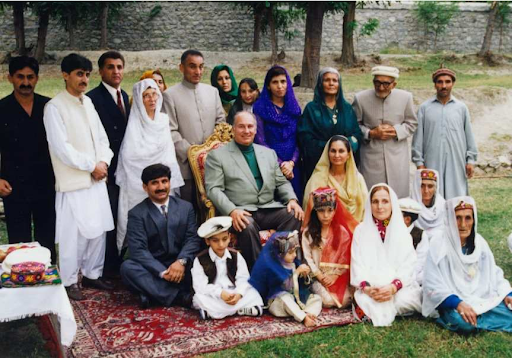
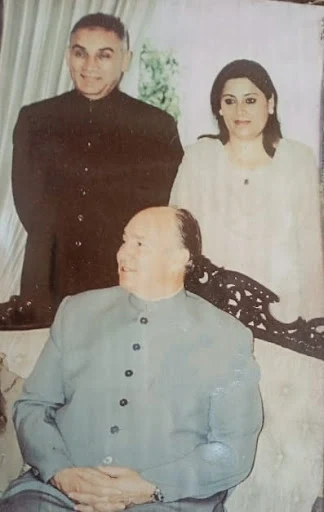
My MAWLA


1958 - Karachi (planning of first ever visit to North - read the blessing endorsed on the picture that MAWLA gave to my father after the MULAQAT)
1996 - Jutial Gilgit


Karachi - 2000 (See the double grip. I remember the warmth)


2000 - Governor House Karachi.

Islamabad - 2005


"Tell the world what your Imam is doing. We have a lot to tell, don't be afraid." - 2002
REORIENTATION & RESTRUCTURING: In February 2000, Mawla Shah Karim ul-Hussaini summoned four Institutional leaders from Pakistan. In this Mulaqat one of the important topics was ‘REORIENTATION and RESTRUCTURING’ of AKDN and Jamati Institutions in Pakistan.  Mawla had assigned me ( VP of Council in Pakistan) to announce this immediately with the government (for AKDN) and within the Jamat for Jamati Institutions. Detailed TALIQAs on the topic followed in subsequent months and years and I did not see any progress. I started an awareness campaign first with the Jamati leadership and then with prominent Jamati members in 2013..

LINK

SOURCES

Constitution updated on 11th Feb 2025 by H.H. Shah Rahim -ul - Hussaini (will be shared on availability).

On Sunday 16 March 2025, the Jamat will mark 40 days since our beloved Mawlana Shah Karim passed to the grace of Allah.


For our Jamat, the demise of our 49th Imam, who guided us with care and affection for 67 years, has evoked a sense of intense sadness. Feelings of connection and attachment to the specific person of the Imam are normal and expected, as is sorrow at his passing, which can take time to subside.


Our faith assures us that the Shia Ismaili Muslims are never without an Imam. On 4 February 2025, the umbrella of protection and love for the Jamat passed seamlessly from the 49th to the 50th Imam, before we even realised it. Therefore, Our Jamat is fortunate to have a living and present guide at all times, which is a defining feature of our tariqa.


Monday, February 3, 2025

Redefining a Road Map for Hunza

VOICE CLIP, Shahid Qalandar

Redefining a roadmap for Hunza to evolve into an egalitarian knowledge society, as initially proposed in my blog titled *Hunza Development Forum*, requires a strategic, inclusive, and sustainable approach. Below is a refined roadmap that incorporates contemporary challenges and opportunities to create a model for the rest of Pakistan:

1. Vision Statement

To transform Hunza into an egalitarian knowledge society that thrives on innovation, sustainability, and inclusivity, serving as a beacon of progress and harmony for Pakistan and beyond.

2. Core Principles

RESPONSIBILITY FOR DELIVERY - INSTITUTIONAL (by well-defined MANDATES)    

Inclusivity: Ensure equal opportunities for all, regardless of gender, ethnicity, or socioeconomic status.

    Sustainability: Prioritize environmental conservation and sustainable development.

    Innovation: Foster a culture of creativity, technology, and knowledge-sharing.

    Collaboration: Engage local communities, government, NGOs, and international partners.

    Cultural Preservation: Protect and promote Hunza’s unique cultural heritage.

3. Strategic Pillars

A. Education and Knowledge Development

        1. Revamp Education System:

           - Introduce modern, technology-driven curricula in schools and colleges (STEM EDUCATION - through Lifelong Learning Centers).

           - Establish vocational training centres to equip youth with practical skills  (e.g., IT, tourism, agriculture).

       - Promote lifelong learning through community libraries and online platforms.


2. Higher Education and Research:

       - Partner with national and international universities to establish research centres on sustainable development, climate change, and cultural studies.

       - Offer scholarships for Hunza students to study abroad, with a commitment to return and contribute locally.

3. Digital Literacy:

       - Provide affordable internet access and digital devices to all communities.

       - Train teachers and students in digital tools and coding.

B. Economic Empowerment

    1. Sustainable Tourism:

       - Develop eco-friendly tourism infrastructure.

       - Promote cultural and adventure tourism while preserving natural resources.

       - Train locals in hospitality and tourism management. (services pf SERENA Chain)

    2. Agriculture and Food Security:

       - Introduce modern, climate-resilient farming techniques.

       - Support organic farming and local food processing industries.

       - Establish farmer cooperatives to improve market access (LAND BANKING).

    3. Entrepreneurship and Innovation:

       - Create incubators and innovation hubs to support startups.

       - Provide microloans and grants for small businesses, especially for women and marginalized groups (WO/VO savings, BETTER TOMORROW COLLECTIONS).

       - Promote e-commerce to connect local products with global markets.

C. Social Development and Inclusivity

    1. Gender Equality:

       - Launch programs to empower women through education, healthcare, and economic opportunities.

       - Promote women’s participation in decision-making processes.

    2. Healthcare for All:

       - Upgrade healthcare facilities and ensure access to quality services (TELEMEDICINE).

       - Focus on preventive care, mental health, and nutrition.

    3. Community Engagement:

       - Strengthen local governance through participatory decision-making (LSO/VO/WO - implementation of Civil Society Learning material issued by AKDN in 2007).

a.    https://the.akdn/en/what-we-do/building-resilient-communities/civil-society.

b.    https://www.facebook.com/share/v/18QNT2JChH/

c.    https://www.facebook.com/share/v/1GWbRDhtkJ/

    - Establish community centres for cultural, educational, and social activities (use existing JK premises).

D. Environmental Sustainability

    1. Renewable Energy:

       - Transition to solar, wind, and hydropower to meet energy needs (see idea demonstration projects).

       - Promote energy-efficient practices in homes and businesses.

    2. Waste Management:

       - Implement recycling and waste reduction programs.

       - Educate communities on sustainable waste disposal.

    3. Conservation Efforts:

       - Protect Hunza’s natural landscapes, forests, and water resources ( through TMS).

       - Promote eco-tourism and responsible travel practices (services of BHT).

E. Cultural Preservation and Promotion (BHT)

    1. Documentation and Revival:

       - Record and archive Hunza’s oral histories, languages, and traditions.

       - Revive traditional crafts, music, and festivals.

    2. Cultural Exchange:

       - Organize cultural events and exchanges with other regions of Pakistan and the world.

       - Use digital platforms to showcase Hunza’s heritage globally.

F. Implementation Strategy

1. Short-Term Goals (1-3 Years):

       - Conduct needs assessments and baseline surveys.

       - Launch pilot projects in education, tourism, and renewable energy (every home a world-class university).

       - Build partnerships with government, NGOs, and private sector.

2. Medium-Term Goals (3-7 Years):

   - Scale up successful pilot projects.

   - Establish research centers and innovation hubs.

   - Strengthen local governance and community participation.

3. Long-Term Goals (7-15 Years):

       - Achieve self-sufficiency in education, healthcare, and energy.

       - Position Hunza as a global model for sustainable development.

       - Share best practices with other regions of Pakistan (civil society learning material issued by AKDN in 2007).

G. Monitoring and Evaluation

        - Establish a dedicated task force to oversee implementation (through a network of LSOs).

        - Use data-driven metrics to track progress in education, economic growth, environmental sustainability, and social development.

        - Regularly engage stakeholders for feedback and course correction.

H. Funding and Partnerships

    - Seek funding from government programs, international donors, and private investors besides saving schemes within the social setup of LSOs.

    - Leverage crowdfunding and community contributions.

    - Collaborate with NGOs, academic institutions, and development agencies.

I. Communication and Advocacy

    - Use social media, blogs, and local media to raise awareness about the initiative.

    - Organize workshops, seminars, and conferences to share progress and insights.

    - Build a global network of supporters and advocates for Hunza’s development.

By following this roadmap, Hunza can evolve into a thriving knowledge society that balances progress with tradition, serving as an inspiring model for the rest of Pakistan. The key lies in collective action, innovation, and a steadfast commitment to the principles of equality and sustainability.

Wednesday, January 29, 2025

Deep Seek and my Blog

RELATED COURSE , INSTALL

To use DeepSeek to compile posts for your blog titled "Hunza Development Forum," you can leverage its research, content generation, and organization capabilities. Here's a step-by-step guide:

 1. **Define Your Blog's Focus**

   - Clearly outline the topics you want to cover on the Hunza Development Forum. For example:

     - Sustainable development in Hunza

     - Tourism and cultural preservation

     - Infrastructure and economic growth

     - Environmental conservation

   - Share these topics with DeepSeek to help it tailor its responses to your needs.

2. **Research Assistance**

   - Use DeepSeek to gather information on relevant topics. For example:

     - Ask for data on Hunza's economic growth, tourism statistics, or environmental challenges.

     - Request summaries of academic papers, reports, or news articles related to Hunza.

   - Example prompt:  

     *"Provide recent statistics on tourism growth in Hunza Valley and its impact on local development."*

3. **Content Generation**

   - Use DeepSeek to draft blog posts. Provide instructions to ensure the content aligns with your blog's tone and style.

   - Example prompts:

     - *"Write a 500-word blog post on the importance of sustainable tourism in Hunza Valley."*

     - *"Create a listicle of 10 ways to promote cultural preservation in Hunza."*

   - You can also ask DeepSeek to refine or expand on existing drafts.

4. **SEO Optimization**

   - Ask DeepSeek to help optimize your posts for search engines. Provide target keywords, and it can suggest improvements.

   - Example prompt:  

     *"Suggest SEO-friendly titles and meta descriptions for a blog post about eco-friendly infrastructure in Hunza."

5. **Engaging Content Ideas**

   - Use DeepSeek to brainstorm engaging content ideas for your blog.

   - Example prompts:

     - *"Suggest 5 unique blog post ideas about community-driven development in Hunza."*

     - *"What are some trending topics related to sustainable development in mountainous regions?"*

6. **Multilingual Support**

   - If your audience includes non-English speakers, use DeepSeek to translate or create content in multiple languages.

   - Example prompt:  

     *"Translate this blog post about Hunza's cultural heritage into Urdu."*

7. **Organize and Schedule Posts**

   - Use DeepSeek to create a content calendar. Share your posting frequency and goals, and it can help you plan topics and deadlines.

   - Example prompt:  

     *"Help me create a 1-month content calendar for the Hunza Development Forum, focusing on environmental conservation."*

8. **Engage with Your Audience**

   - Use DeepSeek to draft responses to comments or questions on your blog.

   - Example prompt:  

     *"Draft a thoughtful response to a reader's question about the challenges of waste management in Hunza."*

9. **Analyze and Improve**

   - Ask DeepSeek for tips on analyzing your blog's performance and improving engagement.

   - Example prompt:  

     *"What metrics should I track to measure the success of my blog, and how can I improve reader engagement?"*

By integrating DeepSeek into your workflow, you can streamline the process of researching, writing, and managing your blog, ensuring high-quality and consistent content for the Hunza Development Forum. Let me know if you'd like help with a specific post or topic! 


SUFI MUSIC


DeepSeek is a powerful AI assistant with a wide range of capabilities. Here’s a breakdown of what it can do for you:  

### 🔍 **Knowledge & Information**  

- Answer general knowledge questions (history, science, tech, etc.)  

- Provide explanations on complex topics (math, physics, finance, etc.)  

- Summarize articles, research papers, and books  

- Offer up-to-date information (with web search when enabled)  

### 📝 **Writing & Content Creation**  

- Generate essays, reports, and articles  

- Help with creative writing (stories, poetry, scripts)  

- Improve grammar, style, and readability  

- Rewrite or paraphrase text  

- Generate marketing content (ads, social media posts, emails)  

### 💻 **Coding & Tech Support**  

- Write, debug, and explain code (Python, Java, C++, etc.)  

- Help with algorithms, data structures, and software design  

- Assist in web development (HTML, CSS, JavaScript)  

- Analyze errors and suggest fixes  

### 📊 **Data Analysis & Productivity**  

- Extract insights from uploaded documents (PDF, Word, Excel, etc.)  

- Help with Excel formulas, data visualization, and reports  

- Assist in business planning, strategy, and market research  

### 🌍 **Language & Translation**  

- Translate between multiple languages  

- Improve fluency in conversations  

- Explain grammar and vocabulary  

### 🧠 **Personal & Professional Assistance**  

- Brainstorm ideas for projects or startups  

- Provide career advice and resume tips  

- Help with study plans and exam preparation  

- Offer book recommendations & learning resources  

### � **Fun & Entertainment**  

- Tell jokes, riddles, and trivia  

- Generate D&D stories, game plots, and character ideas  

- Recommend movies, music, and games  

### 🔄 **File Upload Support**  

- Read and extract text from **PDFs, Word, Excel, PPT, and TXT files**  

- Summarize or analyze uploaded documents  

### ⚡ **Advanced Features**  

- **128K context window** (remembers long conversations)  

- **Free to use** (no hidden costs)  

- **Web search** (when enabled for latest info)  

Would you like help with something specific? 😊

UPDATE

Friday, January 17, 2025

Is it Possible to have a Peaceful World

RELATED , GLOBAL PEACE FORUM

The dream of a peaceful world has captivated humanity for centuries. While achieving perfect peace may seem like an unattainable utopia, many believe it is possible to create a world with significantly less violence and conflict.

There are several arguments supporting this possibility:
* The decline of large-scale wars: In recent decades, the number of large-scale interstate wars has decreased significantly. This suggests a trend towards a more peaceful global order.
* The power of international cooperation: Organisations like the United Nations and the International Court of Justice have played a role in resolving conflicts and promoting peaceful resolutions.
* The growing global interconnectedness: Increased communication and trade between countries can foster understanding and interdependence, making conflict less likely.
* The power of individual action: Each person can contribute to creating a more peaceful world through their actions, such as promoting understanding, resolving conflicts peacefully, and advocating for non-violent solutions.

However, some challenges make achieving a completely peaceful world difficult:
* The persistence of local conflicts: While large-scale wars may be less common, regional and civil wars cause immense suffering.
* The threat of terrorism: Its rise poses a significant challenge to global security and peace.
* The arms race: The continued development and proliferation of weapons of mass destruction remains a major threat to peace.
* Economic inequality and social injustice: These issues can fuel resentment and conflict, making it difficult to achieve lasting peace.
Despite these challenges, many believe that a more peaceful world is possible. This requires a multi-faceted approach that addresses the root causes of conflict, promotes international cooperation, and empowers individuals to be agents of peace.