Thursday, September 26, 2024

Community-Centric Tourism

 Community-Centric Tourism: A Pathway to Sustainable Economic Development

Community-centric tourism, which emphasizes the involvement and empowerment of local communities, offers a promising avenue for sustainable economic development, particularly when focusing on indigenous cultures. This approach benefits local economies, preserves cultural heritage, and promotes environmental sustainability. In the context of GB, the point of contact with the community needs to be redefined, and it should be the Union Council or the active LSO in the village, not the Numbardar.

Key Benefits of Community-Centric Tourism

* Economic Empowerment:

* Job Creation: Tourism directly creates jobs in various sectors such as hospitality, transportation, and handicrafts, providing economic opportunities for local residents.

* Revenue Generation: Tourists contribute to local economies through spending on accommodation, food, souvenirs, and activities.

* Diversification: Community-centric tourism can diversify local economies, reducing reliance on a single industry and increasing resilience to economic shocks.

* Cultural Preservation:

* Heritage Promotion: Indigenous cultures can be showcased through traditional practices, ceremonies, and storytelling, attracting tourists interested in experiencing authentic cultural experiences.

* Community Ownership: By involving local communities in tourism planning and management, their cultural heritage is protected and preserved for future generations.

* Cultural Appreciation: Community-centric tourism fosters respect and understanding of different cultures, reducing stereotypes and discrimination.

* Environmental Sustainability:

* Responsible Tourism: By focusing on sustainable practices, such as eco-friendly accommodations and minimizing environmental impact, community-centric tourism can contribute to preserving natural resources.

* Local Knowledge: Indigenous communities often possess deep knowledge of their environment and can share their insights with tourists, promoting sustainable practices and conservation efforts.

* Community-Based Conservation: Local communities can play a vital role in protecting natural areas and biodiversity through community-based conservation initiatives.

Strategies for Implementing Community-Centric Tourism

* Community Involvement:

* Participatory Planning: Involve local communities in all stages of tourism development, from planning to implementation.

* Ownership and Management: Empower local communities to own and manage tourism enterprises.

* Benefit Sharing: Ensure that the benefits of tourism are fairly distributed among community members.

* Cultural Authenticity:

* Preservation of Traditions: Support the preservation of traditional practices and customs.

* Local Storytelling: Encourage local people to share their stories and cultural heritage with visitors.

* Authentic Experiences: Focus on providing authentic cultural experiences that are meaningful to both tourists and locals.

* Sustainable Practices:

* Eco-Friendly Accommodations: Promote the development of eco-friendly accommodations and infrastructure.

* Responsible Tourism: Encourage responsible tourism practices, such as minimizing waste and conserving resources.

* Community-Based Conservation: Support community-based conservation initiatives to protect natural areas.

* Capacity Building:

* Training and Development: Provide training and development opportunities for local communities to enhance their skills in tourism-related fields.

* Access to Resources: Facilitate access to financial resources, technology, and markets to support local tourism enterprises.

By implementing these strategies, community-centric tourism can be a powerful tool for sustainable economic development, promoting indigenous cultures, and preserving natural resources.

Case Study: The Impact of Fort Restoration on Hunza, Pakistan

The Restoration of Baltit and Altit Forts

The Hunza Valley in Pakistan, a region known for its stunning landscapes and rich cultural heritage, has witnessed a significant transformation in recent years due to the restoration of its historical forts, Baltit and Altit. These iconic structures, once symbols of power and prestige for the Hunza State, have been meticulously restored and transformed into cultural heritage sites.

Economic Impact

* Tourism Boom: The restoration of the forts has attracted a significant influx of tourists, both domestic and international. Visitors come to marvel at the architectural beauty, learn about the history of the Hunza State, and experience the local culture.

* Job Creation: The tourism boom has led to a surge in job opportunities in the region. Local residents have found employment in various sectors, including hospitality, transportation, and handicrafts.

* Revenue Generation: The increased tourism has generated substantial revenue for the local economy through hotel bookings, restaurant meals, souvenir purchases, and other tourist expenditures.

Cultural Impact

* Preservation of Heritage: The restoration of the forts has played a crucial role in preserving the cultural heritage of the Hunza Valley. These structures are tangible symbols of the region's history and identity.

* Community Pride: The restoration has instilled a sense of pride among the local community. The forts have become a source of identity and a symbol of their ancestors' achievements.

* Cultural Exchange: The forts have become platforms for cultural exchange, attracting scholars, researchers, and tourists from around the world. This interaction has helped to promote understanding and appreciation of Hunza's culture.

Environmental Impact

* Sustainable Tourism: The restoration of the forts has been accompanied by efforts to promote sustainable tourism practices. This includes minimizing environmental impact, preserving natural resources, and supporting local communities.

* Conservation Efforts: The forts have become focal points for conservation initiatives, raising awareness about the importance of protecting the region's natural beauty.

Challenges and Future Directions

* Infrastructure Development: To fully capitalize on the tourism potential, there is a need for further investment in infrastructure, such as transportation, accommodation, and facilities.

* Community Engagement: Ensuring that the benefits of tourism are shared equitably among the local community is essential for long-term sustainability.

* Preservation of Authenticity: Balancing the demands of tourism with the preservation of the forts' authenticity is a delicate task.

In conclusion, the restoration of Baltit and Altit forts has had a profound impact on the Hunza Valley, contributing to economic development, cultural preservation, and environmental sustainability. By addressing the challenges and building on the successes, the region can continue to thrive as a popular tourist destination while preserving its unique heritage.

What Is Community-Based Tourism? (treehugger.com)


Would you like to explore a specific aspect of community-centric tourism, such as case studies or challenges?

Community-centric tourism, or community-based tourism (CBT), is a fantastic way to create meaningful travel experiences while supporting local communities. Here are some ideas on how we can promote and engage in community-centric tourism (A parallel view):

1. Promote Local Culture and Traditions

Cultural Tours: Organize tours that highlight local traditions, crafts, and festivals. This allows visitors to immerse themselves in the community’s way of life.


Workshops and Classes: Offer classes in traditional crafts, cooking, or music, where tourists can learn directly from local artisans.
2. Support Local Businesses

Homestays and Guesthouses: Encourage tourists to stay in locally-owned accommodations rather than large hotels. This ensures that the economic benefits stay within the community.


Local Markets: Promote visits to local markets where tourists can buy handmade goods and produce directly from the community.
3. Sustainable Practices

Eco-friendly Activities: Develop tourism activities that have minimal environmental impact, such as guided nature walks, bird watching, or cycling tours.


Conservation Projects: Involve tourists in local conservation efforts, such as tree planting or wildlife protection programs.
4. Community Involvement

Community Meetings: Hold regular meetings with community members to discuss tourism plans and ensure their needs and ideas are considered.


Training and Employment: Provide training for locals in hospitality, tour guiding, and other tourism-related skills to create job opportunities.
5. Authentic Experiences

Cultural Exchange Programs: Facilitate programs where tourists can live with local families and participate in their daily activities.


Storytelling Sessions: Organize sessions where elders and community leaders share stories and history with visitors.
6. Marketing and Promotion

Social Media Campaigns: Use social media to showcase the unique aspects of the community and attract tourists interested in authentic experiences.


Partnerships: Collaborate with travel agencies and online platforms to promote community-centric tourism packages.

Community-based tourism not only provides travelers with unique and enriching experiences but also empowers local communities by creating sustainable economic opportunities and preserving cultural heritage.

Would you like to explore any specific aspect of community-centric tourism further?

RELATED

Monday, September 16, 2024

The concept of soul

 The concept of a soul is a deeply spiritual and philosophical one, and its exact meaning varies significantly across different cultures, religions, and philosophical traditions.

Generally speaking, a soul is often considered to be a non-physical entity that gives life, consciousness, and identity to a living being. It is often associated with the spiritual or immaterial aspect of a person, as opposed to the physical body.

Here are some common interpretations of the soul:

 * Immortal essence: In many religions and philosophies, the soul is believed to be eternal, existing both before and after the physical body dies.

 * Consciousness or mind: The soul is sometimes seen as the seat of consciousness, thoughts, feelings, and emotions.

 * Spirit or life force: The soul may be considered the animating force that gives life to a living being.

 * Unique identity: In some traditions, the soul is seen as the unique and individual essence that defines a person.

It's important to note that these are just a few examples, and the concept of the soul can be interpreted in many different ways. Ultimately, the meaning of the soul is a personal and subjective matter that often involves deep spiritual or philosophical beliefs.

Would you like to explore the concept of the soul in a specific religion or philosophy?

Thursday, September 5, 2024

Herbs for a Healthy Quality of Life

 Herbs for a Healthy Quality of Life


Many herbs have been used throughout history for their potential health benefits. While more research is needed to confirm some of these claims, many herbs have shown promise in supporting overall well-being. Here are a few popular options:

Adaptogens

Adaptogens are herbs believed to help the body adapt to stress. They can help reduce anxiety, fatigue, and improve overall resilience. Some popular adaptogenic herbs include:

 * Ashwagandha: Known for its potential to reduce stress and improve sleep.

 * Ginseng: Often used to boost energy and cognitive function.

 * Rhodiola: May help improve mood, mental clarity, and physical performance.

Digestive Health

Certain herbs can support digestive health and alleviate symptoms like bloating, constipation, and heartburn. These include:

 * Peppermint: Often used to soothe digestive upset and relieve symptoms of irritable bowel syndrome (IBS).

 * Ginger: Can help reduce nausea, bloating, and indigestion.

 * Fennel: May aid in digestion and reduce gas.

Immune Support

A strong immune system is essential for overall health. Some herbs may help boost your immune response:

 * Echinacea: Often used to prevent and treat colds and flu.

 * Elderberry: May help reduce the duration and severity of colds.

 * Astragalus: Believed to strengthen the immune system and protect against infections.

Other Potential Benefits

Some herbs have been studied for their potential benefits in other areas, such as:

 * Turmeric: May help reduce inflammation and support brain health.

 * Lavender: Often used to promote relaxation and improve sleep.

 * Green tea: Contains antioxidants that may help protect against chronic diseases.

Important Note: While these herbs have been used traditionally for various health benefits, it's essential to consult with a healthcare professional before starting any new herbal supplement. They can help determine if these herbs are suitable for you and provide personalized recommendations.

Would you like to know more about a specific herb or its potential uses?


Wednesday, August 14, 2024

When is capacity loss in lead/acid batteries ‘premature’?


How to Revive Old Lead Acid Batteries: https://www.instructables.com/How-to-revive-old-lead-acid-batteries/ (instructables.com)

Understanding and Addressing Premature Capacity Loss (PCL) in Lead-Acid Batteries

Premature Capacity Loss (PCL) in lead-acid batteries refers to a significant and unexpected reduction in the battery's ability to store and deliver charge, occurring much earlier than its anticipated service life. Unlike gradual capacity fade due to normal ageing, PCL can drastically shorten a battery's operational lifespan, leading to untimely replacements and potential system failures.

This document provides a comprehensive overview of PCL, delving into its primary causes, diagnostic considerations, potential restoration techniques (along with their inherent risks), crucial preventive measures to maximise battery lifespan, and essential safety precautions for handling lead-acid batteries.

What Defines "Premature" Capacity Loss?

Capacity loss is considered 'premature' when a battery fails to deliver its rated capacity or experiences a rapid decline in performance early in its expected lifecycle, long before typical end-of-life degradation would occur. This is distinct from the natural, gradual decrease in capacity that all batteries exhibit over hundreds or thousands of charge-discharge cycles. Identifying PCL involves observing a substantial drop in performance disproportionate to the battery's age or usage history.

Key Causes of Premature Capacity Loss

Several factors can contribute to PCL. Understanding these is crucial for both prevention and potential restoration:

1.  **Sulfation:** This is a primary culprit. If a lead-acid battery is left in a discharged state for extended periods, or consistently undercharged, the lead sulfate formed during normal discharge crystallizes and hardens on the battery plates. These hard crystals are difficult to reconvert to active material during charging, effectively reducing the plate surface area available for electrochemical reactions, thus impeding energy storage and release.
2.  **Grid Corrosion:** The positive plate grids, typically made of a lead alloy, are susceptible to corrosion over time. This process is an inherent part of battery aging but can be accelerated by:
    * **High Temperatures:** Elevated operating or storage temperatures significantly increase the rate of corrosion.
    * **Overcharging:** Consistently charging the battery at excessively high voltages generates excess heat and oxygen, promoting grid corrosion.
    * **Material Choice:** The specific alloy composition of the grid material can also influence its corrosion resistance.
3.  **Improper Charging Practices:**
    * **Consistent Overcharging:** As mentioned, this leads to grid corrosion, excessive gassing (water loss), and potential damage to the active material.
    * **Consistent Undercharging:** Leads to progressive sulfation.
    * **Deep Discharges:** Regularly discharging a standard lead-acid battery beyond its recommended depth of discharge (DoD) can stress the plates, leading to active material shedding and reduced cycle life.
4.  **Electrolyte Stratification:** In flooded lead-acid batteries, the electrolyte (sulfuric acid and water) can become stratified, with a higher concentration of acid at the bottom and a lower concentration at the top. This leads to uneven plate utilization, promoting sulfation in the upper parts of the plates and increased corrosion in the lower parts.
5.  **Loss of Water (in Flooded Batteries):** Due to evaporation or electrolysis during charging, especially at high temperatures or during overcharging. If the electrolyte level drops below the top of the plates, the exposed plate area becomes inactive and can be permanently damaged.
6.  **High Operating Temperatures:** Consistently operating batteries in high-temperature environments accelerates most degradation mechanisms, including grid corrosion and water loss.
7.  **Manufacturing Defects:** Though less common, flaws in manufacturing can lead to early failure.

Diagnosing PCL

Before attempting any restoration, diagnosing the root cause of capacity loss is critical to avoid further damage and determine if restoration is even feasible. This may involve:

* Checking the battery's age and usage history.
* Measuring open-circuit voltage and voltage under load.
* Testing specific gravity of the electrolyte (for flooded batteries).
* Using specialized battery testing equipment.

Attempting Restoration: Techniques, Risks, and Considerations

While PCL can sometimes be irreversible, certain techniques may help recover some lost capacity, particularly if sulfation is the primary cause. However, these methods carry risks and are not always successful.

**Important Considerations Before Attempting Restoration:**

* **Safety First:** Always follow safety precautions (detailed below) when working with batteries.
* **Not a Guaranteed Fix:** Restoration is not always possible, especially if the battery has severe grid corrosion, active material shedding, or internal shorts.
* **Potential for Further Damage:** Incorrectly applied restoration techniques can permanently damage the battery.
* **Cost-Effectiveness:** For older batteries or those with severe PCL, replacement is often a more reliable and cost-effective solution.

Restoration Techniques:

1.  **Desulfation (Reconditioning Charge):**
    * **Equalization Charging:** This involves a controlled overcharge at a higher-than-normal voltage for a limited period (typically for flooded batteries). The aim is to reverse mild sulfation and balance the voltage of individual cells.
        * **Caution:** Must be done carefully according to manufacturer recommendations, as it can accelerate grid corrosion and water loss if done improperly or too frequently. Only use a charger with a dedicated, controlled equalization mode.
    * **Pulse Charging/Desulfation Devices:** Some chargers or standalone devices apply high-frequency electrical pulses designed to break down lead sulfate crystals.
        * **Caution:** The effectiveness of these devices varies. Ensure the device is suitable for your battery type and capacity. Monitor the battery for overheating.
2.  **Electrolyte Adjustment (For Flooded Batteries Only):**
    * **Topping Up with Distilled Water:** If electrolyte levels are low and plates are exposed, carefully add *distilled or deionized water* to cover the plates. Do not overfill (electrolyte expands when charging).
        * **Important:** Never add acid unless you are certain the loss of capacity is due to spillage and you are a qualified technician. Incorrect acid concentration will damage the battery.
3.  **Battery "Reconditioner" Additives:**
    * Various chemical additives claim to revive batteries by dissolving sulfate or improving electrolyte properties.
Caution: The efficacy of many such products is scientifically debatable, and some may even be harmful. Use with extreme caution and scepticism, preferably after researching independent reviews.

Preventing Premature Capacity Loss: Best Practices for Battery Longevity

Prevention is the most effective strategy to maximize the lifespan of lead-acid batteries:

1.  **Maintain Proper Charge Levels:**
    * Avoid deep discharges beyond the battery's specified limits.
    * Recharge the battery promptly after discharge.
    * Avoid prolonged storage in a discharged state.
    * Ensure the battery is fully charged regularly to prevent sulfation.
2.  **Use Appropriate Charging Methods:**
    * Employ a high-quality charger that matches the battery type (flooded, AGM, Gel) and capacity.
    * Use multi-stage "smart" chargers that adjust the charging profile (bulk, absorption, float) to optimize charging and prevent overcharging.
    * Follow the battery manufacturer's recommendations for charging voltages and currents.
3.  **Regular Maintenance (Especially for Flooded Batteries):**
    * Periodically check the electrolyte level and top up with distilled water as needed. Ensure plates are always covered.
    * Keep battery terminals clean, dry, and tight to ensure good electrical connections.
    * Perform periodic equalization charges (for flooded batteries) if recommended by the manufacturer, but don't overdo it.
4.  **Control Operating Temperature:**
    * Store and operate batteries in a cool, dry place whenever possible. Avoid exposure to extreme heat, which accelerates degradation.
    * Ensure adequate ventilation around batteries to dissipate heat generated during charging and discharging.
5.  **Consider Battery Type for the Application:**
    * For applications prone to vibration, requiring maintenance-free operation, or where batteries might be installed in non-upright positions, consider Sealed Lead-Acid (SLA) batteries like Absorbed Glass Mat (AGM) or Gel types. AGM batteries, for instance, are generally more resistant to sulfation from partial state of charge operation compared to traditional flooded types.
6.  **Monitor Battery Health:**
    * Regularly check the battery's performance. If you notice a decline in capacity or longer charging times, investigate promptly. Early detection of issues can sometimes allow for corrective action before PCL becomes severe.

Crucial Safety Precautions When Handling Lead-Acid Batteries

Lead-acid batteries contain corrosive sulfuric acid and can produce explosive hydrogen gas during charging. Always prioritize safety:

1.  **Wear Protective Gear:** Always wear safety glasses or a face shield, acid-resistant gloves, and appropriate protective clothing to protect against sulfuric acid splashes.
2.  **Work in a Well-Ventilated Area:** Charge and work on batteries in areas with good ventilation to prevent the accumulation of hydrogen gas.
3.  **Avoid Sparks, Flames, and Smoking:** Hydrogen gas is highly flammable. Keep all sources of sparks, open flames, and smoking materials away from batteries, especially during and immediately after charging.
4.  **Use Insulated Tools:** Use tools with insulated handles to prevent accidental short circuits across battery terminals, which can cause sparks, arcing, and even battery explosion.
5.  **Handle with Care:** Batteries are heavy. Use proper lifting techniques. Avoid dropping them.
6.  **Check for Damage:** Before handling, inspect the battery casing for cracks, leaks, or damage. Do not use a damaged battery.
7.  **Proper Connection:** Ensure correct polarity when connecting charger leads or battery cables (Positive to Positive, Negative to Negative). Incorrect connection can damage the battery, charger, and connected equipment.
8.  **Acid Spill Management:** Have neutralizing agents (like baking soda for acid spills) and water readily available in case of an electrolyte spill.
9.  **Follow Manufacturer Instructions:** Always adhere to the specific safety and handling guidelines provided by the battery manufacturer.
10. **Store Properly:** Store batteries in a cool, dry, and well-ventilated area, away from direct sunlight and incompatible materials.

Conclusion

Premature Capacity Loss in lead-acid batteries can be a frustrating and costly issue. However, by understanding its common causes, practicing diligent preventive maintenance, and employing proper charging techniques, users can significantly extend battery lifespan. While some restoration techniques exist, their success is limited, and prevention remains the best approach. Always prioritize safety when working with or around lead-acid batteries.

Further Resources:
* Repair of Premature Loss of Capacity in Lead-Acid Batteries: [https://www.sciencedirect.com/science/article/pii/037877539280044C]

Thursday, August 1, 2024

Glossary: A to Z of BOOK-III

Download these books:

BOOK1, BOOK2, BOOK3, BOOK4, BOOK5, BOOK6, BOOK7, BOOK8, BOOK9, BOOK10CONNECTING WORLDS IN A GLOBALISINGAGE; CONSTITUTION, TALIMAT BOOKS, CONNECTING THE WORLDS

Glossary:

The purpose of a glossary is to clarify and define specialized terminology for the reader. Here are some specific functions it serves:

1. **Enhance Understanding**: It helps readers understand complex or technical terms that may not be familiar to them.

2. **Provide Quick Reference**: A glossary offers a quick way for readers to find definitions without needing to look up terms elsewhere.

3. **Support Learning**: It can aid in the learning process by providing concise explanations and context for terms related to a specific subject.

4. **Improve Communication**: By defining specific terms, a glossary can help ensure that all readers have a shared understanding of key concepts.

5. **Enhance Engagement**: It can make content more accessible and engaging, encouraging readers to continue exploring the material without getting bogged down by unfamiliar jargon.


Overall, a glossary increases the accessibility and usability of a text, especially in academic or technical works.

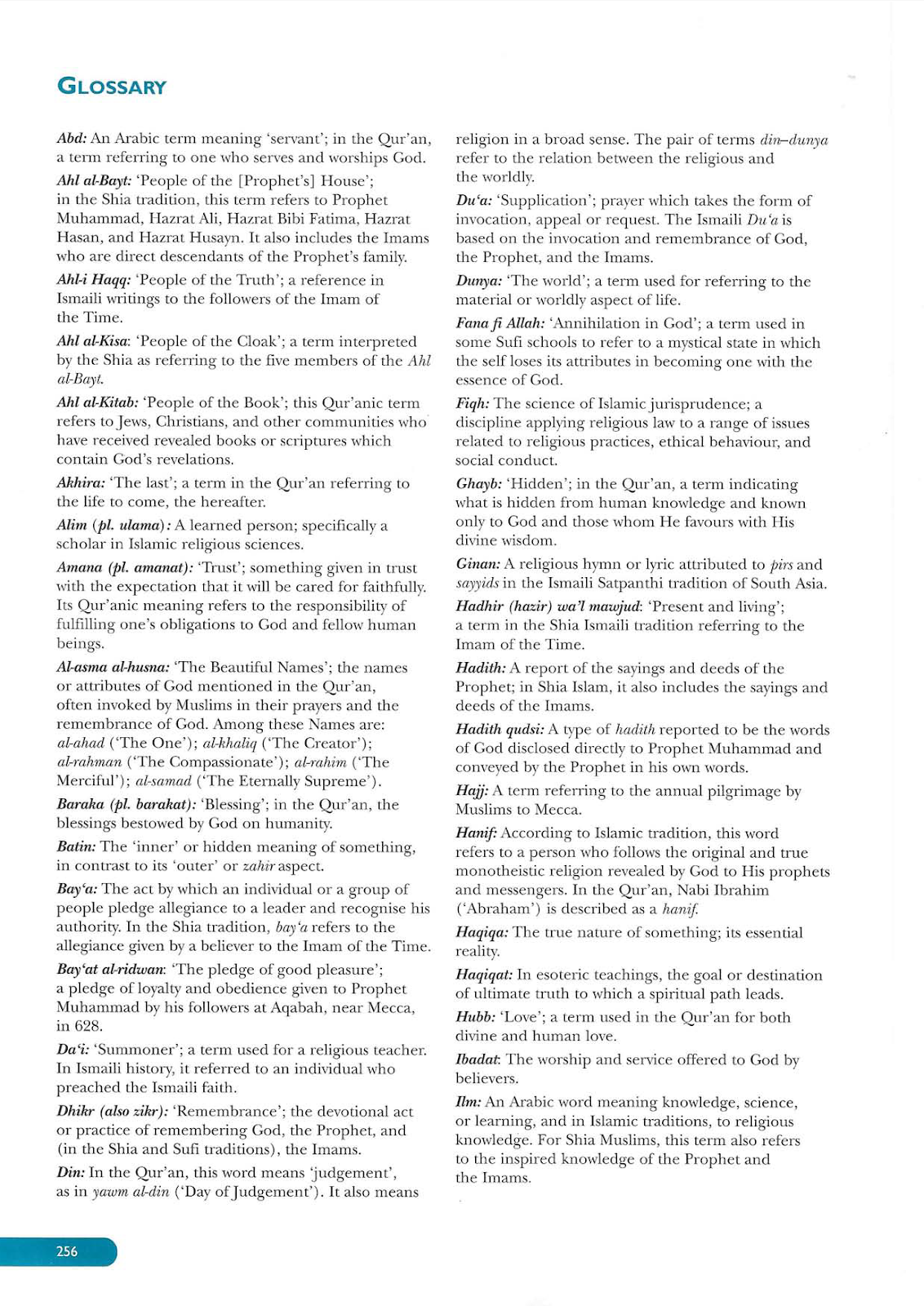
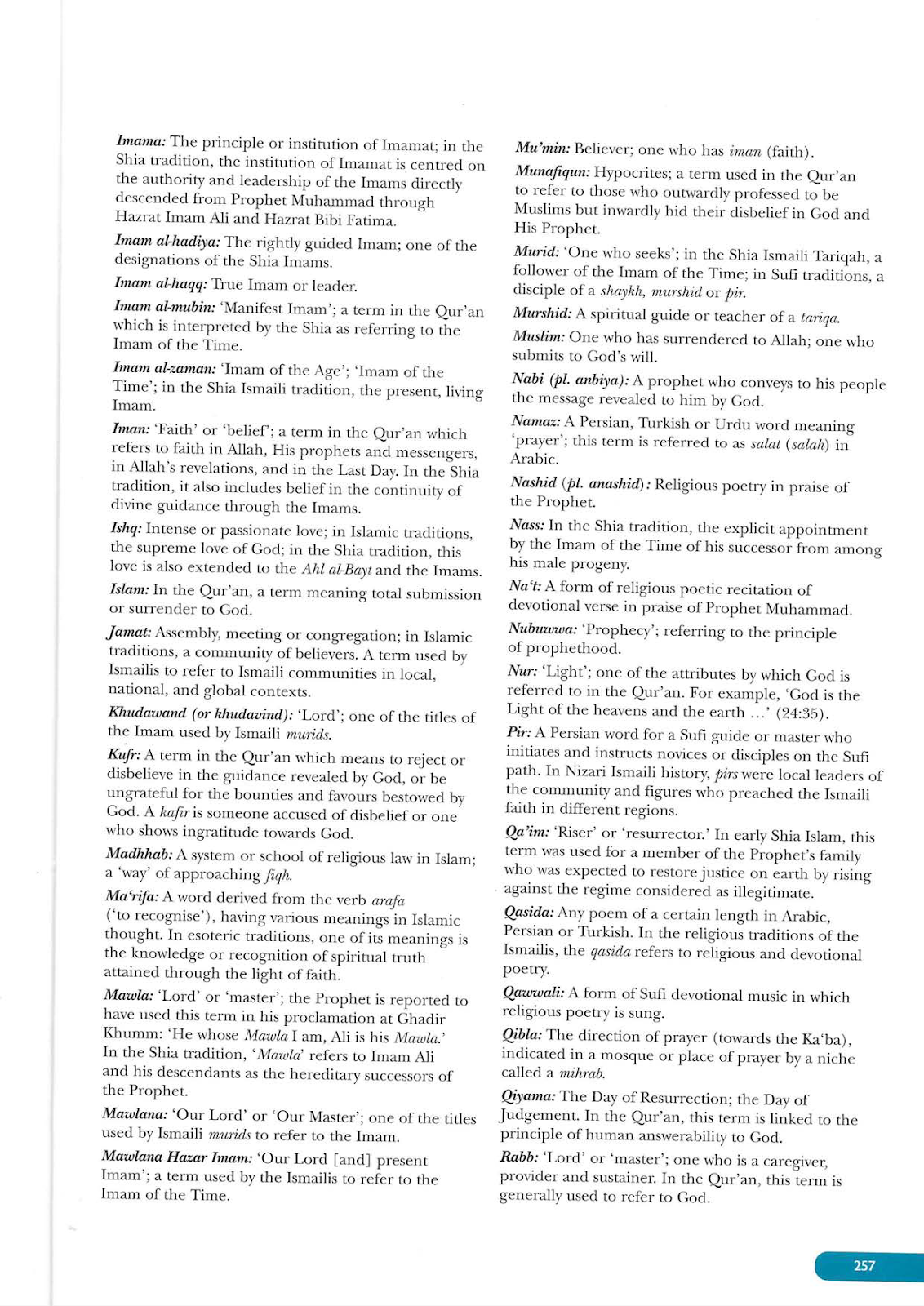
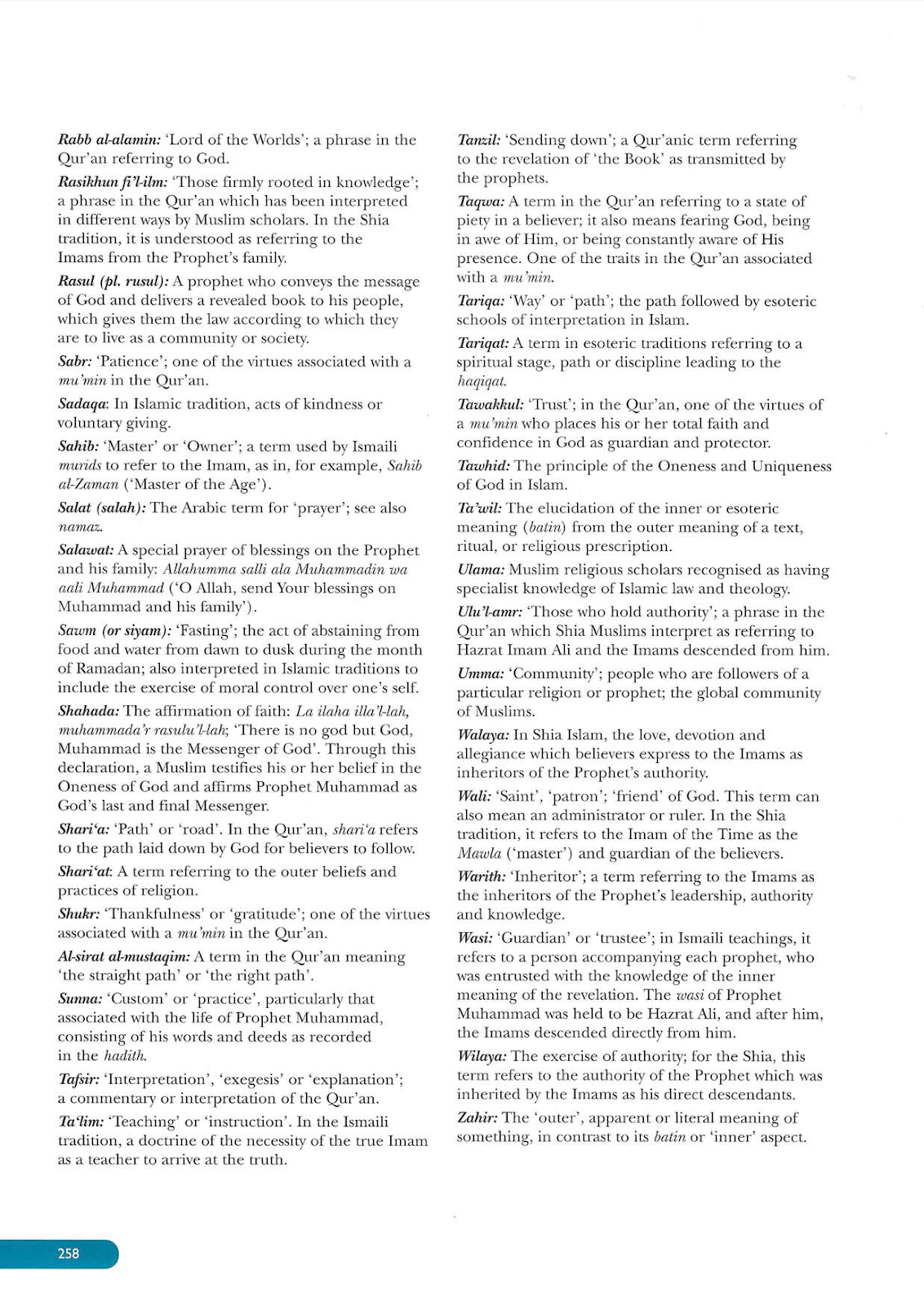
A to Z of the glossary on pages 256 to 258 of BOOK3 was expanded with the help of AI in the series of posts on my blog to ENHANCE ENGAGEMENT with this book covering the important topic of FAITH and PRACTICE. Text in BLUE is the explanation extracted from the book and the links will help download the set of books recommended for understanding the Ismaili faith and practice.


GO BACK

Zahir: The Exoteric Dimension

GO BACK

Download these books:

BOOK1, BOOK2, BOOK3, BOOK4, BOOK5, BOOK6, BOOK7, BOOK8, BOOK9, BOOK10CONNECTING WORLDS IN A GLOBALISINGAGE; CONSTITUTION

 Zahir: The ‘outer’ apparent or literal meaning of something, in contrast to its batin or ‘inner’ aspect.

Zahir: The Exoteric Dimension

It's a crucial term in Islamic thought, particularly in the context of Quranic interpretation and Sufism.

Key Points about Zahir:

  • Outer Appearance: Zahir refers to the apparent, literal, or external meaning of something, often a text or phenomenon.

  • Contrast with Batin: It is typically contrasted with Batin, which represents the inner, hidden, or esoteric meaning.

  • Quranic Interpretation: In Quranic studies, Zahir refers to the obvious meaning of the text, while Batin is associated with deeper allegorical or spiritual interpretations.

  • Sufism: Sufis often employ the concepts of Zahir and Batin to differentiate between the exoteric practices of Islam and the inner spiritual journey.

Significance of Zahir:

Understanding the Zahir is essential for a foundational understanding of any text or subject. It provides the basis for further exploration into the deeper, often hidden meanings.

Quranic Verses and the Concepts of Zahir and Batin

Verses Related to the Apparent and Hidden

  • Quran 3:7: "It is He who has sent down to you, [O Muhammad], the Book; in it are verses [that are] precise - they are the mother of the Book - and others unspecific. As for those in whose hearts is deviation, they follow that of it which is unspecific, seeking discord and seeking an interpretation [of it] by [their own] interpretation. But none knows its interpretation except Allah and those firm in knowledge. They say, 'We believe in it,' all of it, and to our Lord we submit.' "

This verse distinguishes between clear and ambiguous verses in the Quran, suggesting different levels of understanding.

Quranic Verses on Knowledge and Understanding

The Quran often contrasts those who possess knowledge with those who do not.

Here are some key verses:  

1. Verse (39:9) - English Translation - The Quranic Arabic Corpus

corpus.quran.com

Direct Comparison of Knowledge and Ignorance

  • Quran 39:9: Groups)

"Is he who stands in devotion all night, prostrating and standing, fearing the Hereafter and hoping for the mercy of his Lord, [like one who does not]? Say, 'Are those who know equal to those who do not know?' Only the possessors of understanding will remember."  

This verse clearly differentiates between those who possess knowledge and those who do not, emphasizing the superiority of knowledge.

Importance of Knowledge and Reflection

  • Quran 29:43: "Do the people think that they will be left alone because they say, "We believe," and will not be tested? We certainly tested those before them, and Allah will surely know those who believe and know those who lie."

This verse highlights the importance of faith accompanied by knowledge and understanding.

  • Quran 3:190: "Indeed, in the creation of the heavens and the earth and the alternation of night and day are signs for those of understanding."  

  • 1. aboutislam.net

  • aboutislam.net


This verse emphasizes the significance of using intellect and knowledge to understand the signs of God in the universe.

Knowledge as a Divine Gift

  • Quran 2:269: "Allah grants wisdom to whom He wills, and whoever is granted wisdom has been granted great good. But only those of understanding will remember."

This verse underscores that knowledge is a divine gift and that only those with understanding can truly benefit from it.

Additional Verses

While not directly comparing knowledge and ignorance, these verses emphasize the importance of knowledge and understanding:

  • Quran 2:156: This verse highlights the importance of patience and prayer for those who believe and have knowledge.

  • Quran 3:18: This verse emphasizes the importance of following those who have knowledge.

These verses, among others, establish the Quranic perspective on the significance of knowledge and understanding, contrasting it with ignorance and disbelief.

Quran 39:7: This verse contrasts the apparent world (heavens and earth) with the worship of false deities, suggesting a distinction between the visible and the unseen.

Interpretations and Considerations

It's important to note that the concepts of Zahir and Batin developed significantly in Sufism and Shia Islam. The Quranic verses provide a foundation, but their specific interpretation in relation to Zahir and Batin is a matter of scholarly discourse.

  • Contextual Understanding: The verses must be understood within their historical and cultural context.

  • Theological Interpretations: Different Islamic schools of thought offer varying interpretations of these verses.

  • Sufi and Shia Perspectives: These traditions have developed elaborate systems of interpreting the Quran, often distinguishing between the apparent and the hidden meanings.

Sufism and the Zahir-Batin Dichotomy

Sufism, with its emphasis on inner spiritual experience, has extensively developed the concepts of Zahir and Batin.

  • Exoteric (Zahir): In Sufism, the Zahir encompasses the external aspects of Islam, such as ritual prayer (salat), fasting (sawm), and pilgrimage (hajj). These are essential but considered the foundation for the deeper spiritual journey.

  • Esoteric (Batin): The Batin represents the inner dimension of Islam, focusing on purification of the soul, knowledge of God (ma'rifa), and union with the divine (fana). This is achieved through practices like dhikr (remembrance of God), meditation, and contemplation.

Sufis often use the analogy of the shell and the kernel. The Zahir is the shell, essential for protection but not the ultimate goal. The Batin is the kernel, the true essence and nourishment.

Shia Islam and the Zahir-Batin Dynamic

While Shia Islam doesn't emphasize the Zahir-Batin dichotomy as explicitly as Sufism, the concepts are still present.

  • Exoteric (Zahir): Shia Islam, like Sunni Islam, has a robust legal framework (Sharia) that governs the external aspects of religious life. This includes prayer and other obligatory acts.

  • Esoteric (Batin): The Shia emphasis on Imamate and the belief in the hidden esoteric knowledge possessed by the Imams introduces a layer of depth. While the external practices are essential, the true understanding of Islam, according to Shia, lies in the teachings of the Imams, which are often seen as the Batin.

The concept of taqiyya, the Islamic doctrine of dissimulation, where Shia Muslims might outwardly conform to Sunni practices while inwardly holding to their beliefs, also highlights the distinction between Zahir and Batin in Shia thought.

Challenges and Nuances

  • Balance: Both Sufism and Shia Islam emphasise the importance of balancing the Zahir and Batin. Neglecting either aspect can lead to an incomplete understanding of Islam.

  • Interpretations: The specific interpretations of Zahir and Batin vary within both traditions.

  • Misunderstandings: An exclusive focus on the Zahir might hinder spiritual growth.