Monday, January 25, 2021

ON-LINE DISSEMINATION OF TALIMAT

 TALIMAT

The IIS Secondary Curriculum, GOOD NEWSUSER GUIDE; SIGN IN; ALSO READ. CLOUD STORAGE, VIDEO, RELATED VIDEOS, DOWNLOAD TALIMAT BOOKS, RELATED

NOTE: I hope to continue updates in the coming weeks so that readers can download the text of the complete set of costly publications as a free-of-cost option. Furthermore, ITREB has arranged the availability of two volumes on one topic only while the remaining set is not yet available despite a long waiting time and emphasis given by the Imam of the time.

“That intellect is what separates Man from the rest of the physical world in which he lives. As we develop not only our primary education but also our secondary education, I hope that my Jamat will find great happiness in reading the new books that we will make available on the history of thought, the history of faith within Shia Islam.  This notion of the capacity of the human intellect to understand, and to admire the creation of Allah will bring you happiness in your everyday lives. Of that I am certain." 

 MHI, 17 August 2007 

"Since 1957, it has been my objective to retrieve from our history and strengthen, by present day endeavours, the magnificent Shia Imami Ismaili identity and its inter-relationships with other Muslim schools of interpretation, thought, and practice of the faith. I feel that, at this juncture in the Jamat’s history, when different traditions are beginning to converge, it is particularly important to bring forward those aspects of faith and practice, including diverse forms of devotional expression, that are rooted in the Shia Ismaili Tariqah of Islam as interpreted by the Imam-of-the-Time. "

MHI - 13 December 2008 

The Secondary Level Curriculum developed by the Institute of Ismaili Studies is an international, multilingual programme in religious education and the humanities for the global Ismaili community. It introduces Ismaili youth to a modular programme of education that examines Islam as both faith and civilisation in world history and in contemporary times. The curriculum approaches the study of Islam in general, and the Shia Ismaili tradition specifically, from humanistic, civilisational and normative perspectives. Students are guided to explore aspects of Islam that relate to religion, ethics, thought and culture in Muslim societies and the Ismaili Tariqah within a broad educational framework. The modules in the curriculum are based on a study of selected facets of Muslim societies, in the past and present, including their interactions with other civilisations and cultures. The content is interwoven with thematic strands which reflect a wide range of human endeavours and pursuits that have found expression in Muslim societies and Ismaili contexts. Among the subjects covered are civilisation and society, encounters in Muslim history, Muslims in the contemporary world, intellectual traditions, ethics and development, faith and practice, the Qur’an and its interpretations, and the literature of Muslim traditions. In dealing with these subjects, the curriculum aims to address themes that are of relevance to the youth and their communities in different regions of the world.

To achieve its aims, the curriculum applies pedagogical approaches consonant with its philosophical framework. It calls for a profile of teachers with a broad set of proficiencies – a profile that is not narrowly specialist but reflects an acquaintance with a range of subjects and contexts. For this purpose, the secondary curriculum is taught by professionally qualified teachers who have been specially trained to guide students in studying Islam and the Ismaili tradition at the secondary level. These teachers are graduates of the Secondary Teacher Education Programme (STEP) who receive two postgraduate awards (Level 7) in the subjects of Islamic Studies and Education. The curriculum for the secondary level is intended for the 12-16 age group, and can also be extended to 17-18 year old students. It consists of eight modules, presented through student textbooks and teachers’ guides. The materials endeavour to impart the content through pedagogical approaches that are creative and intellectually engaging for both students and teachers.


 This module introduces the rise and development of Islam, from the period of Prophet Muhammad in the sixth and seventh centuries to the rule of the Fatimid Imam-Caliphs from the tenth to the twelfth century. Students are introduced to people, places and events of significance that came to shape the first six centuries of Islam, beginning with its genesis in Mecca and the establishment of the early caliphate in Medina, and tracing the growth of dynastic empires in Damascus, Baghdad, Cordoba and Cairo. Using the city as a space of dynamic creativity, the content presents the flowering of Muslim civilisations in all their manifold aspects. The development of Shia traditions, and the emergence of the Ismailis in this phase of history, features as an integral part of the broader Muslim narrative.

Encounters in Muslim history:

This module forms a sequel to Muslim Societies and Civilisations which covers developments from the sixth to the twelfth century. It picks up the various narratives at the beginning of the eleventh century and presents encounters and exchanges among Muslims and with other societies until the beginning of the modern period at the end of the eighteenth century. It highlights key events and figures, linking them to major challenges and achievements of each age. Analyses of the interplay of forces and influences in various regions reveals unfolding dynamics in the political, economic, social, intellectual and cultural arenas. Significant aspects of the history, thought and culture of diverse Ismaili communities during this period are interwoven into these narratives of exchanges, detailing their interactions within these systems.

Continues with the content covered in Muslim societies and civilizations. In this module we study, developments which occurred in Muslim and neighboring lands from eleventh to the eighteenth century.

We begin by the events leading up to the eleventh century, and then move on to examine significant development that followed.

The module explores the rise of new states in empires resulting from conquests, migration and settlements in Muslim lands in this period.

The history of the Ismaili Imamat that of Ismaili communities in various regions, forms an important part of this module. We will learn about the Ismailis in the Alamut period and in the centuries that followed.

A later module, entitled Muslims in the contemporary World, concludes the coverage of Muslim history in the secondary curriculum. It introduces key events and developments relating to Muslims societies from the eighteenth to the early twenty-first century.

Encounters in Muslim history thus forms a bridge between the early and modern periods of Muslim history. It highlights the diverse civilizations, cultures and traditions which arose in Muslim contexts in this intermediate period.

 Key Questions

The module explore broad questions such as:

  • How have Muslims of different times and places understood Islam ?
  • How has their understanding led to the Islam becoming adapted and expressed across different cultures?
  • What has led to the rise of a vast diversity of Muslim communities and traditions over time?


We will approach these questions and examining Muslim context from political, economic and cultural perspectives.


Open and Download


OPEN &DOWNLOAD


Open and Download

Open and Download

This module is based on the subject of devotional and ethical literature in Muslim societies. Through an examination of a range of texts across changing periods and contexts, from the formative age of Islam to contemporary times, students are led to explore the diversity and richness of literature that has developed in Muslim societies over time. Examples from a wide variety of literary forms and genres are used as illustrations to reveal the creative application of language in Muslim writings, including Ismaili contributions, in diverse contexts and cultures.

The anthological content in this volume highlights selections from the Qur’an and the hadith, passages from works attributed to the early Shia Imams, and excerpts from the writings and speeches of the contemporary Imams. Also presented here are exemplary pieces of literature from religious texts, historical biographies, moral fables, mystical poetry and devotional hymns. Drawing from diverse Muslim sources, and particularly Shia and Ismaili literature, the contents as a whole yield insight into the creative ways in which religious, devotional, spiritual and ethical themes have found inspiring expressions in Islam.


This module engages with the dimensions of religious meaning and practical expressions in a community of faith. These aspects are approached from a variety of perspectives by exploring the significance of faith, worship, devotion, ethics, religious practices, prayer, and spaces of worship and gathering in Muslim communities. Students are guided to reflect on these themes in the context of the Shia Ismaili Tariqah, and with reference to other Islamic traditions. The module seeks, as a whole, to develop insights into the role of faith and religious practice in a faith community, and in relation to the individual believer’s search for ultimate meaning.

Volume One of Faith and Practice in Islamic Traditions examines concepts of faith as expressed in a range of sources, from the Qur’an to the religious literature of Islamic traditions. A central part of this volume is devoted to understandings of tawhid and nubuwwa in Islam, and the significance of the principle of imama for Shia Muslims. The first volume also includes a study of selected facets of faith, including ibadat, divine love, and the concepts of zahir and batin in esoteric traditions of Islam.

Volume Two extends the study by focusing on the practice of the faith in Islamic traditions. Among the topics covered are the origins and development of selected rites and practices in Muslim history, the diverse forms they have taken in Muslim communities, and the meaning given to them in the practice of the faith. Also discussed in this volume are the different forms of prayer in Islam, and the diversity of spaces of worship and gathering to be found in Islamic contexts.

Ethical Pathways to Human Development:  In this module students are led to engage with the issue of social development by examining the impact of poverty, illness, illiteracy, homelessness and social injustice on communities across the world. A contextual approach is adopted to issues of development and their impact on the quality of life of people in different regions. The major part of the module is devoted to examining the institutions and projects of the Aga Khan Development Network (AKDN) as case studies of innovative approaches to development in selected parts of the world. Particular attention is paid to the spiritual and ethical ideals which underpin the concept of development upheld by Imamat institutions. Students are led to a deeper appreciation of the long, historical tradition in the Ismaili Tariqah of Imams giving institutional realisation to the ethical call of Islam.


https://www.iis.ac.uk/learning-centre/curriculum/secondary-curriculum/


https://photos.app.goo.gl/B9vzKmR9PeqWv4M38


 THE QURAN AND ITS INTERPRETATIONS:

The module engages students in a study of selected facetsof the Quran al-Sharif, beginning with it's revelation the seventh century and leading into its diverse interpretations and expressions in Muslim history. The contents of the Quran are presented at an introductory level from historical and contextual perspectives. Among the themes and concepts examined are revelation, authority and guidance;faith, ethics and social justice; and creation, spiritual quest, and the hereafter. The module also considers various positions on Quran as a source of guidance which emerged in Islamic traditions, based on different understandings of authority. This aspect is examined in greater detail in the context of Shia Islam and the principle of Imamat. A central feature of the module is the diversity of understandings of the Qur'an which has developed over historical periods and across various cultures, from theological, juridical and mystical readings to literary and aesthetic renderings.
This first of two volumes commences with a chronological examination of selected Qur'anic passages linked to the Meccan and Medinan contexts. This introduction leads into a discussion of different views on the compilation of the Qur'an into written text, and its use as a source of guidance in relation to different notions of authority which emerged in early Muslim history. Also explored in this volume is the development of the study of the Qur'an through disciplines and methods which evolved over time, including the application of tafsir and tawil to its contents. 
The final part of the volume is devoted to the concepts of authority and guidance in the Qur'an as reflected in the accounts of the prophets, and in passages interpreted by Shia Muslims as related to the principle of Imamat.
The second volume expands the study of the Quran through an examination of additional themes and illustrative interpretations in Muslim contexts.

DOWNLOADSince the file is large it will take a few minutes to appear on your screen.
TILAWAT: Listen to Surah Rahman.

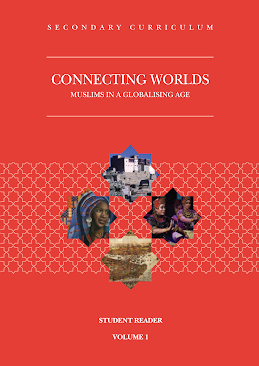
CONNECTING WORLDS IN A GLOBALISING AGE:


In this module, we examine the political, economic, religious, social and cultural transformations that Muslim communities underwent from the 1700s through the 1800s.
For Muslims, this was a time of transition and change. We explore how, weakened by internal strife and rivalries, imperial societies changed, and how traditional notions of authority were redefined, from hierarchical centralised kingships to local regional powers that allowed various elite groups and organisations to share power.
We witness an era of shifting power dynamics among Muslim societies, and also with European imperial powers buoyed by the industrial, technological and scientific revolutions. We see transformations in trade, with the decline of some trade routes and the ascendance of others, and the increased cross-cultural encounters among diverse communities of the globe.
The borders of some states became more defined, with the spread of colonisation, while others remained fluid.

NOTE: This living document links will be updated in the coming days to cover the download/accessibility of all modules.

PRESENTATION DAY-1

PRESENTATION DAY-2

RELATED DOWNLOADS TOWARDS REORIENTATION:

1. WHERE HOPE TAKES ROOT

2. ISMAILI CONSTITUTION

3. GUIDELINE BOOKLETS

4. WEBCAST

 USER GUIDE

How to Sign In to the IIS Digital Curriculum e­book platform 

  1. Go to https://islamic­ 

publications.kitaboo.eu/reader/Islamic_Publications/#!/ to access the Sign In screen. 

  1. Enter your login credentials sent to you by email to sign in. 

  1. You can check your password by clicking on the show/hide icon. 

  1. Click on the Sign In button to view your bookshelf. 


NOTE: To enable the ‘Sign In’ button, the username should be a minimum of six characters, and the password should be a minimum of eight characters. 


Manage Password 

How to reset a forgotten Password 


In case you have forgotten your password, you can retrieve it from the Sign In screen. 


  1. Under the bottom right corner of the Sign In button is the Forgot Password link. 

  1. Select the link, which will lead you to the screen for resetting your password. 

  1. Enter your registered email address to receive an email to reset your password. 


How can I change my Password 


  1. Access your Profile from the main Bookshelf screen. 

  1. Click on the Change Password link. 

USEFUL TIPS

  1. The Online Reader is optimised for viewing on a desktop or laptop computer. Some features may not be clearly visible on a mobile device.
  2. Posters and Picture Cards in the Primary Ta‘lim curriculum are best viewed in the Single Page View.
  3. Set your browser’s default zoom at 100%. If you need to zoom in or out, use the ebook Reader’s Zoom tool.
  4. There are two different search tools on the platform. The Search tool in the ‘Home Screen’ searches a keyword across all the curriculum materials and lists all the items that contain the keyword. The Search tool in the ‘Reader’ searches a keyword within the particular item that is open and lists the pages where the keyword occurs.
  5. The Highlight tool is currently not available for the Preschool and Primary Level materials. However, you can use the Pen tool to identify and mark the selected passages.
  6. The Pen and Highlight tools offer two ways of marking passages, using different colours. You might want to create your own colour codes (e.g. green for discussion points, blue for primary sources, etc.). This will help you to organise and easily identify your marked passages.

Wednesday, December 30, 2020

Our Planet

 OUR PLANET 


42:48

Our Planet: Too Big To Fail

Our economy is fundamentally underpinned by the stability and the resilience of the natural world. But this stability is no longer guaranteed. Our Planet: Too Big To Fail is a 42 minute film that explores the risks of inaction, the impact of investing-as-usual, and the role the finance sector can play in powering a sustainable future. Contact us to find out how you can host a screening where you work: ourplanetourbusiness@wwf.org.uk

42:48

Our Planet: Too Big To Fail

Our economy is fundamentally underpinned by the stability and the resilience of the natural world. But this stability is no longer guaranteed. Our Planet: Too Big To Fail is a 42 minute film that explores the risks of inaction, the impact of investing-as-usual, and the role the finance sector can play in powering a sustainable future. Contact us to find out how you can host a screening where you work: ourplanetourbusiness@wwf.org.uk


Up Next

Host a screening

Do you want to host a screening of Our Planet: Too Big To Fail where you work?

FIND OUT MORE

Our Planet: Our Business

How can the global business community tackle the environmental crisis? Watch our other film for business.

Watch now

This website uses cookies and similar identifiers to give you the best online experience. By clicking 'Allow' you agree to our use of cookies in accordance with our Privacy Notice.


--
Posted By Hisamullah Beg SI(M) to HUNZA DEVELOPMENT FORUM at 12/30/2020 02:28:00 PM

Unsubscribe from new post emails for this blog.


Wednesday, October 28, 2020

Political Action towards an Egalitarian Society

My proposal to all candidates contesting for a seat in legislative assembSources:

1. Book Titled Where Hope Takes Root
5. AKRSP
6. EXTRACT

Political Action towards an Egalitarian Society My proposal to all candidates contesting for a seat in legislative assembly in GB: I hope you concentrate on legislation to result in establishment of DISTRICT and VILLAGE governments in GB as a replication of what PTI has done in KPK - Necessary step in establishing an EGALITARIAN SOCIETY in our region. What is an Egalitarian Society: An egalitarian society is one where every person is entitled to equal rights, receive equal treatment and opportunities. These societies comprise of groups of people who agree to live together inthese societies as egalitarianism as one of their core values. Egalitarianism is the position that equality is central to justice. Egalitarians think, firstly, that unfair life prospects should be equalized. Secondly, that equality is the most or one of the most important irreducible intrinsic or constitutive worth(s) of justice. Thirdly, that welfare should be increased. Outline of an Egalitarian Society: Extracts: "An active Civil Society can open the door for an enormous variety of energies and talents from a broad spectrum of organisations and individuals. It means opening the way for diversity. It means welcoming plurality. ......three critical underpinnings of a quality Civil Society — a commitment to pluralism, to meritocracy, and to a cosmopolitan ethic. This means that initiatives cannot be contemplated exclusively in terms of economics, but rather as an integrated programme that encompasses social and cultural dimensions as well. Education and skills training, health and public services, conservation of cultural heritage, infrastructure development, urban planning and rehabilitation, rural development, water and energy management, environmental control, and even policy and legislative development are among the various aspects that must be taken into account.” “An important facet of modern development thinking is that societies can best strengthen themselves by mobilizing their own dynamic forces rather than relying on external support and direction.” Sources: 1. Book Titled Where Hope Takes Root 2. Civil Society Learning Material 3. Set of TALIMAT Publications. 4. Webcast dated 11th July 2017. 5. AKRSP: https://www.akdn.org/pakistan/akrsp 6. An extract from TALIMAT: In studying history, we come across accounts of nations that arose in various times and places. How societies become established and develop over time is an important area of inquiry. In the following as well as the posts that would follow this module, we are concerned with the question of development of societies in modern times. We examine the growth of modern civilization, and its impact on communities across the globe. We seek to become aware of the situation of the less fortunate who have not benefitted from modern advances. We try to gain a deeper understanding of the meaning of progress by approaching this concept from a variety of perspectives. In short we will assess Dunya (the posts so far have dealt with Din as well as intellectual aspects of life) as it confronts human life, to day, i.e. 21st century. The following is a summary of the units we will cover in the series. Unit 1 - A divided world: We begin the module by comparing the standards of living in wealthy and poor countries, and the questions raised by this division. Unit 2 - The roots of poverty: We examine some of the outcomes of modern history that have led to the growing gap in wealth between the rich and poor nations. Unit 3 - The ethical spirit of Islam: In this unit, we study the ethical responsibilities placed by Islam upon Muslims, and how Muslim communities have sought to meet these responsibilities. Unit 4- Creating new pathways of care: In the second half of the module, we begin our exploration of the AKDN institutions. We examine the principles and approaches that guide their humanitarian work. Unit 5 - Lifelines of hope: This unit leads us to examine in greater detail the activities of the AKDN agencies in disaster relief, providing for basic needs in deprived communities, and creating opportunities for the less fortunate to earn their living. Unit 6 - Spheres of growth: We extend our exploration of the work of AKDN by turning to the issues of health, education and shelter. We study examples of projects undertaken in each of these areas by AKDN agencies. Unit 7- Choices and possibilities: In this concluding unit, we discuss the dilemmas of development facing humanity in the new century. We end by reflecting on the meaning of progress, and the choices open to human beings in creating their future.


Friday, June 26, 2020

My Fathers Manuscripts

https://drive.google.com/drive/folders/1W66we8rMsm0KehlfhlAVaOkB5rutI09K?usp=sharing

My father compiled a few books mostly in Dari (Persian) but could not publish in his life time. I hope to share these through this blog.


My fathers archive has been digitized by my nephew - Asadullah Beg son of Saadullah Beg TAMGHA-E-IMTIAZ and available to any and all researchers.


Friday, May 22, 2020

Distance Learning - Evaluation and Certification

A certificate is an academic document that provides proof of educational requirements. It may qualify a student for higher education or may indicate that the student is proficient in a certain subject or skill set.
Does distance education have value?
Yes, Distance education has more value than regular courses, it also depends on various other situations. If you have experience and you are pursuing higher education in the same line to enhance your degree, then it does count. For higher education people are mostly doing through distance education.
What is the difference between distance and correspondence education?
A major difference between these two forms of study is the pacing of classes or lessons. Correspondence is not in 'real time'. Assignments are sent to students, completed and then returned. ... These courses are also run over semesters, with a specific time required to complete the course and specific terms of study
Which type of evaluation is done in the ODL system?
Term-end examination (summative evaluation)
Almost all the ODL institutes give a higher weighing to the final or term-end examination, which is conducted annually.
Free Online Colleges
Looking for a college education that will cost little to nothing? Believe it or not, it can happen! There are several accredited colleges and universities that will allow you to take college courses and even some that will allow you to earn a degree for little to no money.
Some of these schools require you to have a natural talent in a specific area, such as music. However, there are universities that are open to religious studies, engineering and many other fields that may interest you. Free online schooling is available thanks to many people who donate to education and the founders of these schools who believe in higher education for everyone.

Digital learning management systems

  • CenturyTech – Personal learning pathways with micro-lessons to address gaps in knowledge, challenge students and promote long-term memory retention.
  • ClassDojo – Connects teachers with students and parents to build classroom communities.
  • Edmodo – Tools and resources to manage classrooms and engage students remotely, offering a variety of languages.
  • Edraak – Arabic language online education with resources for school learners and teachers.
  • EkStep – Open learning platform with a collection of learning resources to support literacy and numeracy.
  • Google Classroom – Helps classes connect remotely, communicate and stay organized.
  • Moodle – Community-driven and globally-supported open learning platform.
  • Nafham – Arabic language online learning platform hosting educational video lessons that correspond with Egyptian and Syrian curricula.
  • Paper Airplanes – Matches individuals with personal tutors for 12-16 week sessions conducted via video conferencing platforms, available in English and Turkish.
  • Schoology – Tools to support instruction, learning, grading, collaboration and assessment.
  • Seesaw – Enables the creation of collaborative and sharable digital learning portfolios and learning resources. 
  • Skooler – Tools to turn Microsoft Office software into an education platform.

Systems built for use on basic mobile phones

  • Cell-Ed – Learner-centered, skills-based learning platform with offline options.
  • Eneza Education - Revision and learning materials for basic feature phones.
  • Funzi – Mobile learning service that supports teaching and training for large groups.
  • KaiOS – Software that gives smartphone capabilities to inexpensive mobile phones and helps open portals to learning opportunities.
  • Ubongo – Uses entertainment, mass media, and the connectivity of mobile devices to deliver localized learning to African families at low cost and scale, available in Kiswahili and English.
  • Ustad Mobile – Access and share educational content offline.

Systems with strong offline functionality

  • Kolibri – Learning application to support universal education, available in more than 20 languages.
  • Rumie – Education tools and content to enable lifelong learning for underserved communities.
  • Ustad Mobile – Access and share educational content offline.

Massive Open Online Course (MOOC) Platforms

  • Alison – Online courses from experts, available in English, French, Spanish, Italian and Portuguese
  • Canvas Network – Course catalogue accessible for free for teachers in order to support lifelong learning and professional development.
  • Coursera – Online courses taught by instructors from well-recognized universities and companies.
  • European Schoolnet Academy – Free online professional development courses for teachers in English, French, Italian and other European languages.
  • EdX – Online courses from leading educational institutions.
  • iCourse – Chinese and English language courses for university students.
  • Future Learn – Online courses to help learners study, build professional skills and connect with experts.
  • Icourses – Chinese language courses for university students.
  • TED-Ed Earth School – Online lessons about nature made available continuously during a 5-week period between Earth Day (April 22nd) and World Environment Day (June 5th).
  • Udemy – English, Spanish and Portuguese language courses on ICT skills and programming.
  • XuetangX – Online courses provided by a collection of universities on different subjects in Chinese and English.

Self-directed learning content

  • ABRA - Selection of 33 game-like activities in English and in French to promote reading comprehension and writing skills of early readers.
  • British Council – English language learning resources, including games, reading, writing and listening exercises.
  • Byju’s – Learning application with large repositories of educational content tailored for different grades and learning levels.
  • Code It – Helps children learn basic programming concepts through online courses, live webinars and other kid-friendly material. Available in English and German.
  • Code.org – A wide range of coding resources categorized by subject for K12 students offered for free by a non-profit.
  • Code Week – List of online resources to teach and learn computer coding, available in all EU languages.
  • Discovery Education – Free educational resources and lessons about viruses and outbreaks for different grade levels.
  • Duolingo – Application to support language learning. Supports numerous base and target languages.
  • Edraak -  A variety of resources for K-12 education in Arabic, targeting students, parents and teachers.
  • Facebook Get Digital - Lesson plans, conversation starters, activities, videos and other resources for students to stay connected
  • Feed the Monster – Android application in multiple languages to help teach children the fundamentals of reading, available in 48 languages.
  • History of Africa – A nine-part BBC documentary series on the history of Africa based on UNESCO’s General History of Africa book collection.
  • Geekie – Portuguese language web-based platform that provides personalized educational content using adaptive learning technology.
  • Khan Academy – Free online lessons and practice in math, sciences and humanities, as well as free tools for parents and teachers to track student progress. Available in 40+ languages, and aligned to national curriculum for over 10 countries.
  • KitKit School - Tablet-based learning suite with a comprehensive curriculum spanning early childhood through early primary levels.
  • LabXchange – Curated and user-created digital learning content delivered on an online platform that enables educational and research experiences.
  • Madrasa – Resources and online lessons for STEM subjects in Arabic
  • Mindspark – Adaptive online tutoring system that helps students practice and learn mathematics.
  • Mosoteach – Chinese language application hosting cloud classes.
  • Music Crab – Mobile application accessible for music education. 
  • OneCourse – Child-focused application to deliver reading, writing and numeracy education.
  • Polyup  – Learning content to build math and gaining computational thinking skills for students in primary and early secondary school.
  • Quizlet – Learning flashcards and games to support learning in multiple subjects, available in 15 languages. 
  • SDG Academy Library - A searchable library of more than 1,200 educational videos on sustainable development and related topics.
  • Siyavula – Mathematics and physical sciences education aligned with South African curriculum.
  • Smart History – Art history site with resources created by historians and academic contributors.
  • YouTube – Huge repository of educational videos and learning channels.

Mobile reading applications

  • African Storybook - Open access to picture storybooks in 189 African languages.  
  • Biblioteca Digital del Instituto Latinoamericano de la Comunicación Educativa – Offers free access to Spanish language works and book collections for students and teaching staff in schools and universities
  • Global Digital Library – Digital storybooks and other reading materials are easily accessible from mobile phones or computers. Available in 43 languages.
  • Interactive Learning Program – Mobile app in Arabic to advance reading, writing and numeracy skills created by the United Nations Relief and Works Agency.
  • Reads – Digital stories with illustrations in multiple languages.
  • Room to Read – Resources to develop the literacy skills of children and youth with specialized content to support girls.
  • StoryWeaver – Digital repository of multilingual stories for children.
  • Worldreader – Digital books and stories accessible from mobile devices and functionality to support reading instruction. Available in 52 languages.

Collaboration platforms that support live-video communication

  • Dingtalk – Communication platform that supports video conferencing, task and calendar management, attendance tracking and instant messaging.
  • Lark – Collaboration suite of interconnected tools, including chat, calendar, creation and cloud storage, in Japanese, Korean, Italian and English
  • Hangouts Meet – Video calls integrated with other Google’s G-Suite tools.
  • Teams – Chat, meet, call and collaboration features integrated with Microsoft Office software.
  • Skype – Video and audio calls with talk, chat and collaboration features.
  • WeChat Work – Messaging, content sharing and video/audio-conferencing tool with the possibility of including max. 300 participants, available in English and Chinese.
  • WhatsApp – Video and audio calls, messaging and content sharing mobile application.
  • Zoom – Cloud platform for video and audio conferencing, collaboration, chat and webinars.

Tools for teachers to create of digital learning content

  • Thinglink – Tools to create interactive images, videos and other multimedia resources.
  • Buncee – Supports the creation and sharing visual representations of learning content, including media-rich lessons, reports, newsletters and presentations.
  • EdPuzzle – Video lesson creation software.
  • EduCaixa - Courses in Spanish language to help teachers develop the skills and competencies of learners in areas such as communication, entrepreneurship, STEM and big data. 
  • Kaltura – Video management and creation tools with integration options for various learning management systems.
  • Nearpod – Software to create lessons with informative and interactive assessment activities.
  • Pear Deck – Facilitates the design of engaging instructional content with various integration features.
  • Squigl – Content creation platform that transforms speech or text into animated videos.
  • Trello - A visual collaboration tool used by teachers and professors for easier coursework planning, faculty collaboration, and classroom organization.
  • Online Video Tools -  All-in-one easy-to-use online video tools

External repositories of distance learning solutions

  • Brookings – A catalogue of nearly 3,000 learning innovations. Not all of them are distance learning solutions, but many of them offer digital education content.
  • Common Sense Education – Tips and tools to support school closures and transitions to online and at-home learning.
  • Commonweatlh of Learning – List of resources for policymakers, school and college administrators, teachers, parents and learners that will assist with student learning during the closure of educational institutions.
  • Education Nation – Nordic countries have opened up their learning solutions for the world for free, supporting teachers and learners during the school closures.
  • EdSurge – Community-driven list of edtech products, including many distance learning resources for students, teachers and schools, covering primary to post-secondary education levels.
  • European Commission Resources – A collection of online platforms for teachers and educators, available in 23 EU languages. 
  • Global Business Coalition for Education – List of e-learning platforms, information sharing platform  and communication platforms.
  • Keep Learning Going – Extensive collection free tools, strategies, tips and best practices for teaching online from a coalition of USA-based education organizations. Includes descriptions of over 600+ digital learning solutions.
  • Koulu.me – A collection of apps and pedagogical solutions curated by Finnish edtech companies to facilitate distance for pre-primary to upper secondary learners.
  • Organisation internationale de la Francophonie: Resources for primary and secondary school students and teachers for learning and teaching French.
  • UNEVOC Resources – Tools, guides, MOOCS and other resources collected by UNESCO’s International Centre for Technical and Vocational Education and Training for continued learning in the area of TVET.
  • UNHCR – An extensive list of over 600 distance learning solutions from the United Nations agency for ref
  • EDUCATIONAL YOUTUBE CHANNELS FOR HOMESCHOOLING
  • OER
  • ONLINE CERTIFICATES - EXAMPLES