A collaborative platform for sharing knowledge, ideas and innovative solutions to foster sustainable development in Gilgit-Baltistan, with a special focus on empowering the people of Hunza. Join us in shaping a brighter future through dialogue, education and community-driven initiatives.
Draft of Punjab’s new local bodies system will soon be presented
before provincial assembly
I am waiting
impatiently for this system to be applied in GB through proper legislation. An
administrative order incorporating LSOs has been issued by incumbent CM, but
its application is yet to be noticed - LSOs must form NETWORKS to avail the
potential.
Extract from CIVIL SOCIETY LEARNING MATERIAL on political action in line
with LA TUFSIDU injunction:
"It also helps communities to lobby for change
by working in collaboration with other villages when liaising with the government.".
Please go
through and implement in the working procedures the eight guideline booklets
issued by AKDN which are designed to establish a FIELD DRIVEN system aimed
towards HELPING PEOPLE HELP THEMSELVES in achieving a BETTER TOMORROW. EXPLORE THE WORLD OF HIGHER EDUCATION:
Tulips were originally wild flowers from Central Asia, from the Hindu Mountains in Kazakhstan, but were first cultivated by the Turks, as early as 1000 AD.
We see tulips for the first time in the artworks of the Seldjuks. In the 12thcentury, tulips were included in motifs, especially in the city of Konya, which was the capital of the Anatolian Seldjuks. It seems certain that tulips and tulip culture came with the Turks to Anatolia.
The tulip also has a special place in Sufi culture. Rumi, the great Anatolian Sufi, mentioned the tulip in his poem entitled ‘So Recklessly Exposed’;
December and January, gone. Tulips coming up. It’s time to watch how trees stagger in the wind and roses never rest
Mir Muhammad Baqir Astarbadi (d.1631/32), an Ithna Ashari
scholar known as Mir Dammad is famed as the founder of the hikmat Illahi School
of philosophy. Mir Dammad was often referred to by scholars as the ’Third Teacher”,
the first being Aristotle and the second being Al Farabi. Mir Dammad was highly
esteemed by Twelver theologians and the jurors. He is also well known for
being one the teachers of Sadr al- Din Shirazi, also known as Mullah Sadra.
Mullah Sadra is considered to be one of the most influential Shia
Muslim thinkers. He was particularly interested in understanding hikmat,
gnostic interpretations of the various doctrines of the faith. His esoteric
views often caused him difficultly with religious scholars who stressed the
exoteric aspects of faith.
Mulla Sadra’s thought combined elements from several existing
systems, including Aristotelian logic, Ibne Sina’s metaphysics, and Sufi
mysticism, in addition to Shia Twelver theology. He tried to unify in his
philosophy, the three parts of revelation, reason and purification of the soul.
A story is told of the conversation in which Mulla Sadra asked
Mr Damad was respected by all the religious scholars while he [Mulla Sadra] was
attacked. Mir Damad answered that although they were both saying the same thing,
he hid ideas within so many difficult expressions that only the elite would be
able to understand. Mulla Sadra, on the other hand, wrote so clearly that
anyone with knowledge of Arabic would be able to follow the trend of his ideas [and
could therefore challenge him].
·Which influences are reflected in Mulla Sadra’s philosophy?
·In your view, why did Mulla Sadra seek to unite
the different perspectives?
Exploring ….. Al-Majlisi
One of the most influential Ithna Ashari clerics of his time,
and a proponent of the Usuli school of thought, was Muhammad Baqir al- majlisi
(d.1698). He studied under several prominent teachers, including Mulla Sadra,
and was appointed as the Shaykh al- Islam. He was responsible for consolidating
a Shia Twelver hierarchy of religious experts and bringing the state under the
direction of legal scholars.
Al-Majlisi was considered to be the first Mulla bashi, the
most excellent and most learned scholar’ of the age. As a result, he was
patronized by the court and received financial assistance for his prolific
writings, including works on engineering and ethics. His most famous work,
Bihar al-anwar (Seas of Lights) is a vast encyclopedia of Shia Twelver Islam. Al-Majlisi
maintained clearly that the Imams were the ultimate sources of knowledge on
doctrine and practice, and as a result challenged all other souces of doctrinal
knowledge.
Al-Majlisi was known for his defence of the legal rulings of
the mujtahids and the official institutions. It led to an increased persecution
of those who did not conform to these rulings. Among those persecuted were Sufi
shaykhs, philosophers, messianic figures, and minority communities.
After Christchurch, Here’s How We Can End Hate Speech and Islamophobia
by nbajekal
Racists and bigots believe that diverse societies don’t work. Frustrated that their howling at the moon wasn’t enough, they’re now picking up weapons in an attempt to prove themselves right.
We can’t keep expressing shock and then moving on until the next outrage. We watched in astonished horror last year when a white supremacist entered a synagogue in Pittsburgh and shot dead 11 worshippers. And yet after the initial horror, the world carried on like before.
These haters are destabilizing our societies and concerted action needs to be taken before things get even worse.
To be clear, this isn’t just about Western societies. For many Muslims, the attacks on March 15 on Christchurch mosques that left 50 dead, represent just a tiny part of a global rising tide of anti-Muslim bigotry perpetrated by insecure majorities. From east to west, there are countless examples.
In Myanmar, decades of hate speech and persecution culminated in 2017 with over 700,000 predominantly Muslim Rohingya having to flee to neighbouring Bangladesh after a vicious campaign of ethnic cleansing. The implicated military in Myanmar has been given plenty of diplomatic cover by China, whose authorities are currently holding up to 1 million Uighurs, Kazakhs and other predominantly Muslim ethnic groups in euphemistically titled “transformation-through-education” camps in Xinjiang. It’s one of the stories of our age, subjugation on an epic scale.
Meanwhile, India’s historic multi-faith character has taken a hit under the leadership of Narendra Modi, a man who was chief minister during the 2002 Gujarat pogrom, which resulted in the deaths of hundreds of Muslims. His brand of Hindu nationalism has led to divisiveness rather than unity, leading to growing phenomena such as “cow-related violence”.
Many politicians across Europe have been gaining ground by peddling anti-Muslim messages. France’s Marine Le Pen compared Muslims spilling onto pavements from packed mosques after Friday prayers to Nazi occupiers. A key message of the Brexit campaign was the “threat” of Turkey joining the EU. Arch pro-Brexit campaigner Nigel Farage once accused British Muslims of having “split loyalties”.
The biggest beneficiary of ballot box Islamophobia though is Donald Trump with his campaign promise of a “total and complete shutdown of Muslims entering the United States.” He said that this ban would stay in place until the country's representatives “can figure out what the hell is going on”. Trump arrived on the back of a generation of Islamophobia that went hand-in-hand with the controversial wars in Afghanistan and Iraq—wars that resulted in the still barely acknowledged deaths of hundreds of thousands of Muslims.
When the global picture is this grim, it’s little wonder that many Muslims feel embattled. Especially when they are also being told that despite these tragic numbers, they are actually the aggressors.
This is not, however, a religious conflict. The millions of Muslims who have lost their lives, been put in detention, or repressed in other multifaceted ways, have not been treated this way as part of a religious war. These are not the new crusades. The perpetrators are too diverse and too disparate for this to be case. So are the victims. Christians are also repressed in China, Pakistan and Indonesia. Christian and Muslim Palestinians face violence and discrimination every day in the context of Israel’s occupation of their territory. France and Germany reported disturbingly sharp rises in anti-Semitism last year; who can forget the distressing images of swastikas daubed across graves in Jewish cemeteries in Herrlisheim and Quatzenheim in eastern France? In light of the evidence, a "War on Islam" thesis doesn’t add up.
This is about how nation states treat their minorities. In this respect, Muslim-majority states are also often found wanting. Infamously there are no churches in Saudi Arabia. Given these circumstances, it was no surprise to see Saudi Arabia’s crown prince giving endorsement to China’s treatment of Muslim minorities in Xinjiang.
Harmony isn’t going to be achieved if only we had more interfaith dialogue and more mosque open days. Tackling this threat effectively requires a radical rethink about how we talk about freedom, equality and respect for all.
The strength of a nation lies in how well you treat all your people. It’s a mark of strength when you celebrate everyone who lives alongside you. We move forward when everyone has the freedom to live their lives as they wish, to contribute to their society as they see fit, and to be the people they want to be.
I grew up in Scotland and am proud of my nationality and my faith. We used to say that it takes many different colored threads to make tartan, just as it takes many different types of people to make Scotland. Every culture around the world must find their language to bring people together, rather than to drive them apart. In 1945, the Nazis were defeated through war. This time, we’ll beat the haters through the force of our love, compassion and shared humanity.
FLOATING HYDROELECTRIC GENERATOR AND PUMPING STATION:
Following link demonstrates the operation of this indigenously designed generator to produce cheap and sustainable energy directly from slow moving water in rivelets, rivers and canals throughout Pakistan. SEE: SDG-7
https://www.youtube.com/watch?v=6tnjimBAgQA
It produces cheap electricity for the region and beyond through technology implementable at village level, at the same time meant for pumping water to irrigate barren land all over GB thus creating a potential for poverty alleviation and thousands of jobs in coming decades. SELF HELP and TKN inherent within DJ goals as continuation of the three goals set at the time of launching of AKRSP, is the background. You can visit my blog read the details for implementation through the local entities such as the council, VO, WO and LSO.
This generating unit as well as improved versions can be mass manufactured in the existing workshop established by Norway for repair of turbines in Gilgit thus avoiding the need for additional infrastructure and associated budget.
What is a floating hydroelectric generator? Has such a generator been built anywhere in the world?
Yes, there are floating hydroelectric generators, also known as hydrokinetic turbines. These devices harness the energy of flowing water to generate electricity. They are typically anchored to the riverbed and float on the surface of the water, with the turbine submerged beneath.
While there are several companies developing and manufacturing these turbines, widespread commercial deployment is still relatively new. However, there are examples of successful installations in various locations around the world, particularly in rivers with strong currents.
One example is the Floating Drum Turbine (FDT) developed by Solar Impulse. This technology utilizes a floating turbine that extracts energy from water streams, even in slow-moving rivers and canals. It has been successfully deployed in several locations.
Another example is the hydrokinetic turbines developed by Smart Hydro Power. These turbines are designed to provide electricity to remote communities and have been installed in various locations around the world.
It's important to note that the feasibility of using floating hydroelectric generators depends on various factors, including water flow, depth, and environmental conditions. However, as technology continues to advance, we can expect to see more widespread adoption of these innovative renewable energy solut
250-W Floating type water turbine generator unit
Desirable options for fabricating low speed electric generators:
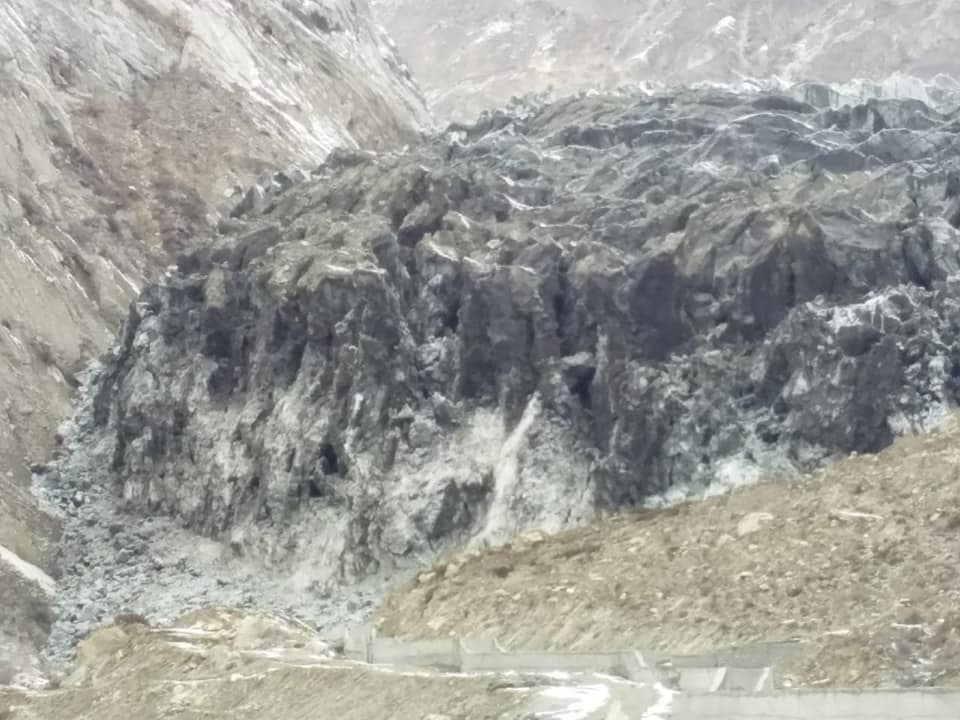
Glacier Surge - A Post in the context of Shishpar Glacier Surge
"You are aware of this ongoing surge of the glacier. In my
opinion it provides a unique opportunity to the students and faculty to
undertake a scientific study through collaboration between UCA and KIU in the
context of mountain specific vision of both universities."
In the fifteenth century, members of various professions in Persia, Anatolia and else where began forming networks of trade guilds or brotherhoods (futuwwat). these guilds provide a sense of security and communal life. they also promoted ethical principles and inspired their members to live by codes of honour, loyalty, justice, brotherhood and piety.
Within the futuwwat, learning ones craft is viewed as a spiritual goal. Shared value systems and ideals led to connections between Sufi tariqas and futuwwat. In some cases, entire guilds would pledge allegiance to the Shaykh or pir of Sufi tariqa.
As a result many of the Sufi brotherhoods became increasingly powerful and influential in various realms of society. Local rulers seeking religious and political legitimacy would also pledge allegiance to the Sufi Shaykhs.
Marriage between ruling families and members of Shaykh's family was seen as a way of strengthening that tie.Thus, shaykhs were able to influence the political, social and economic life of the region in addition to spiritual life.
Where Sufi's have once led lives of individual piety or had loosely grouped around an individual shaykh or pir, tariqas developed now into increasingly well ordered and hierarchical organisations. Networks of tariqas emerged, and leadership became hereditary.
As tariqas grew more numerous, symbols of belonging also became important. Members of particular tariqas wore special clothing to distinguish themselves from members of other tariqas.
Many tariqas in Persia and elsewhere adhere to one of the Shia or Sunni madhhabs. They also acknowledged Hazrat Ali's spiritual guidance. Reverence for Imam Ali and other Imams formed part of the mystical language that became prevalent in many Muslim religions.
As Sufi tariqas spread to different parts of the Muslim lands, they adapted their faith and practice to local contexts.
For example in some Ottoman Sufi orders, both Shia Islam and aspects of pre-Islamic Turkic practices and beliefs were reflected. These brotherhoods found a home among the rural Turcoman populations of eastern Anatolia and Azerbaijan.
The Turcoman Sufi populations remained outside of the Ottoman state structure. They often resented the increasing centralisation of the empire, and its focus on Sunni codes and practices. For this reason, the Ottoman rulers would come to see Sufis orders as a threat to their authority.
The Bektashi and the Alevi orders
One of the most influential Sufi orders in Anatolia was that of the Bektashis. Haji Bektash the founder of the order, is said to have arrived in Anotolia from Nishapur, in Khurasan, in thirteenth century.
According to tradition, Haji Bektash was known for his miraculous powers and life of devotion. It is said that one day when he was young, his teacher came to his classroom to witness Haji Bektas being taught the Quran by two figures. When questioned about them, Bektash said that one on the right was my 'my ancestors Muhammad Mustafa, upon him be supplication and peace,' and on his left was the' pole of saintship, the cupbearer of Kevser, the lion of the lord, the lord of the worlds , commander of the believers, Ali Murtaza.'
Haji Bektash traced his lineage back to Imam Ja'far al-Sadiq, Imam Husayn, Bibi Fatima and Prophet Muhammad.
Haji Bektash's teachings combined Twelver Shia Islam with pre- Islamic Turkish practices. His followers wore distinctive turbans with twelve folds, commemorating the twelve Ithana Ashari Imams.
Speaking in Turkish, the Bektashi appealed to the local populations. Records suggest that during the fourteenth and fifteenth centuries, almost twenty percent of the Ottoman population were Bektashis.
Anather Sufi group in Anatolia were the Alevis, a mystical branch of Islam which followed the Ithna Ashri line of the Imams and also revered Haji Bektash. The Alevis shared some of their beliefs and practices with the Sufi elements of the Bektashi brotherhood.
Groups like Alevis were often termed heretics by the Ottoman authorities. They had their authorities banned, and their members executed.
However the Bektush managed to escape such a fate through linkage with Janissary corps. Ottomon authorities sometimes even funded Bektashi lodges. Janissary corps:This elite fighting unit was made up largely of christian slaves taken as children, educated, converted to Islam, and trained either as soldiers or administrators. The Janissaries owed their loyalty personally to the sultan. Abolished in 1826 after it revolted against the Sultan.

 Posts
Posts